
News
Oil Market Volatility: WTI Dips to Low $90s, Hormuz Diplomacy Provides a Temporary Reprieve

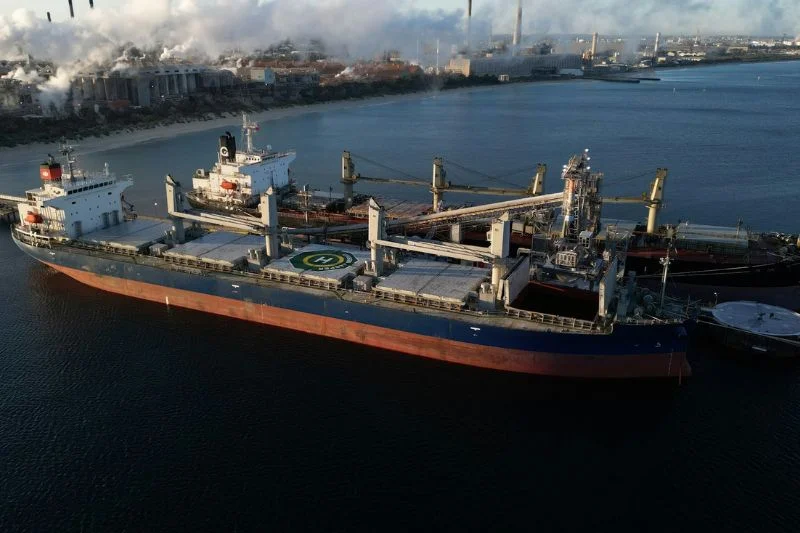
The world energy markets are cautiously cooling down on April 16, 2026, with West Texas Intermediate (WTI) crude futures priced at approximately the lower end of the 90s. This modest retreat follows an episode of severe panic induced by war that had seen prices soar to highs of $110 earlier on this month. Although the dip offers some temporary relief at the pump, the energy analysts caution that the market is on a hair trigger because of the delicate situation at the Strait of Hormuz.
The ongoing price movement indicates a game of tug-of-war between emerging diplomatic breakthroughs and the grim face of the biggest supply disruption ever.
Here are the biggest 1 day price changes for WTI Crude oil since 2018 https://t.co/JgKIMSwbIx pic.twitter.com/k3W3kmTJwj
— Evan (@StockMKTNewz) March 12, 2026
The Pullback to the Low 90s: What is the Push?
WTI was trading at a very low price of approximately 90.63 per barrel on Thursday morning compared to the high of 110.34 that was reached on April 7, 2026. This negative trend is mostly explained by indicators that the crisis with Iran can be in a de-escalation phase.
Traders are closely monitoring reports of “second-round” talks between Washington and Tehran. The simple fact that there is a possibility of a diplomatic solution has eliminated much of the short-term supply disruption premium that had been imprinted on prices, according to analysts at Rigzone. But this reprieve is flimsy; failure in the negotiations may plunge the prices instantly into triple digits.
The Hormuz Factor: A Hair Trigger Market
The Strait of Hormuz is the main center of risk in the world, even though there is price relief. Being a waterway through which an average of more than 20 million barrels of oil are usually moved daily, its partial closure and the existence of naval blockades have resulted in a thin market that is vulnerable to any small news that will create a ripple effect.
Recently, the World Economic Forum pointed out that the impact is much more than crude oil. The disruption is now impacting Liquefied Natural Gas (LNG) and Non-Oil Commodities.
Qatari exports are being affected, and LNG markets across the globe are experiencing long-term deficits. Sulfur, methanol, and fertilizer supplies are at critical lows, posing a threat to food security and production globally.
Inventory Data Gives a Good Flooring
Whereas diplomacy is driving the prices down, domestic data of the United States is preventing a complete breakdown. According to the U.S. Energy Information Administration (EIA), commercial inventories of crude have decreased unexpectedly at the end of the week, April 10, 2026.
The major players who are involved in the EIA report are:
- Crude Inventories: Decreased by 0.9 million barrels to 463.8 million.
- Gasoline Stockpiles: Decreased sharply (by 6.3 million barrels), which means that, despite the high prices, the consumption has not dropped.
- Distillate Fuel: Has reduced by 3.1 million barrels and still stands at approximately 6% below the average of five years of this time of year.
These inventory draws indicate that despite the fact that the war premium may be evaporating, the supply-demand balance has been tight.
The Prognosis Of The Rest Of April
The oil market is in a wait-and-see mode as we head to the end of the month. OPEC+ has re-emphasized that they maintain stability in the market, and reports by OPEC.org indicate that the group is ready to regulate production in case the de-escalation causes an immediate oversupply. At the moment, the new equilibrium seems to be the low 90s—stable but capable of exploding at the first symptom of trouble in the Gulf.
Frequently Asked Questions (FAQs)
1. What is the reason the oil prices went down, yet the Strait of Hormuz is still considered to be high-risk?
The relief of prices was mainly due to diplomacy. News of US-Iran peace talks caused speculators to rush to the markets in order to make some profits, and this minimized the possibility of the Strait being shut completely and permanently.
2. What is the current price of WTI and Brent crude?
By April 16, 2026, WTI was trading above 90.63, and Brent crude had relaxed into the 9495 area. Both are falling compared to early April levels but are still high in relation to averages in 2025.
3. What is the impact of the oil crisis of today on other industries?
In addition to fuel, the Gulf shocks are affecting the manufacture of fertilizers (urea/ammonia), electronics (helium), and electric vehicle batteries (graphite feedstocks), with widespread inflationary effects on the entire global economy.
Stay In The Loop
What’s Driving UAE Economic Growth?
Explore how IMF projections highlight the UAE’s strong expansion and regional leadership in the coming year.
Why Is UAE Leading MENA Growth Rankings?
Discover the key factors behind the UAE’s top GDP growth position across the Middle East and North Africa.
How Is Oman Showing Economic Resilience?
Check how Oman’s economy continues to stay stable and resilient despite global financial uncertainties.
Will UAE Banks See Lending Boom?
Explore why UAE banks are expected to witness significant lending growth and financial sector strength.
How Can Expats Manage Money in Dubai?
Discover smart personal finance strategies that help expats save, invest, and thrive in Dubai.


Nobel Prize 2026 Winners Full List Categories and Achievements

From Abu Dhabi to Brussels: Europe’s Growing Focus on the Muslim Brotherhood and Cross-Border Security

Top 10 Staycations and Overseas Trip Options for UAE Families During Nine Day Half Term School Break

UFC Fight Night Doha Tickets Go on Sale: Guide on Ticket Price, How to Buy Tickets and Attend the Event

Saudi Aviation Authority Confirms 1 Dead, 11 Injured on Sunday Riyadh Airport Attack

UAE Flight Suspensions Extend Across Saudi Arabia
-

 Reports3 days ago
UAE and Saudi Arabia Seek to Strengthen Rail and Infrastructure Integration
-
 Entertainment3 days ago
Lusail Circuit Opens Volunteer Applications for 2026 MotoGP and Formula 1
-
 Reports3 days ago
Kuwait Urges Unified Global Response to Terrorism and Financing
-
 News3 days ago
Trade Deal Talks Concluded Between UAE and Thailand