Opinion
Why Hamas’ Disarmament May Be More Difficult Than It Sounds?

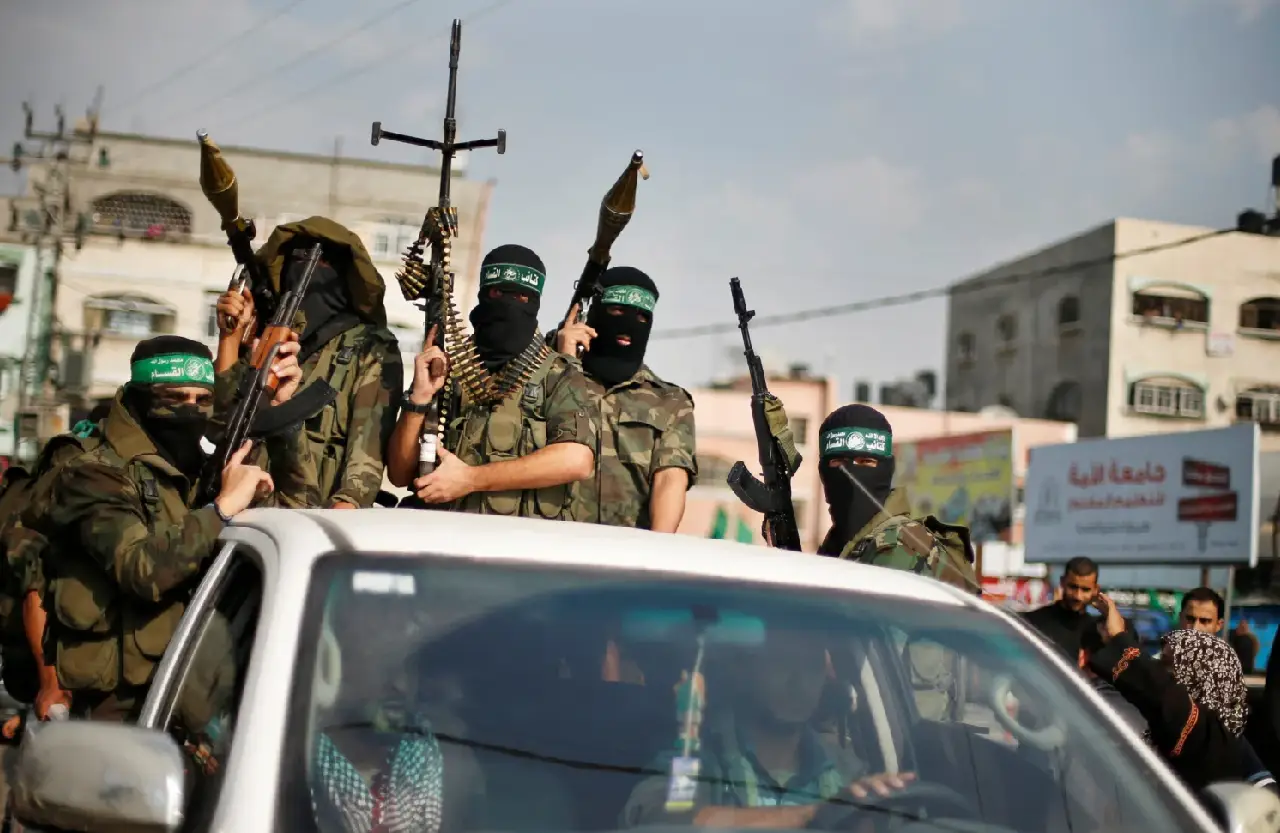
A demand to dismantle and arrest Hamas is a key component of almost all of the international proposals of Gaza ceasefires. One of the key elements in the reconstruction, humanitarian recovery, and long term regional stability is the demilitarization, which various parties often refer to as a necessary first step. The aim on paper seems simple enough. But, in practice, making such a goal a feasible plan is much more complicated than many debates imply.
The challenge is not just about picking up guns and other stuff. It’s about rebuilding institutions, restoring trust in institutions and taking away the need for armed groups to seek solace in arms. Any disarmament accord that does not cover these wider matters will likely exist in a symbolic form rather than become one that is more than just temporary.
The Tunnel Network Changes Everything
Hamas has long had a network of underground tunnels and won’t be able to mobilise the forces if its equipment depots were to face a central attack. As of yet, these tunnels have been used as either transportation, storage or command centres, or as manufacturing dens.
If a large rocket and launcher were found, making sure thousands of smaller rockets and ammunition magazines and amounts of explosives were removed as well would be very hard. Diplomatic verifications of underground infrastructure are not enough to judge and this is one of the main obstacles for any agreement.
Filling the Security Vacuum
With the exception of the Mandalorian Empire, the effective disarmament initiatives generally rely on a credible replacement security force. When one arm of the government agrees to other demands than to discontinue the distribution of arms and as soon as no other institutional means are ready to establish a measure of order, instability tends to follow.
In Gaza, fears of a speedy disarming operation, if conducted without an effective civilian police force, might result in a possible security “gap”. Other competing vested interests or criminal gangs or local insurgent groups might come to wield influence, which would lead to more, not less violence.
The Trust Deficit
Unless there’s one thing more than sequencing. Israel believes that in order to achieve complete disarmament, withdrawal of troops or extensive reconstruction should be put off until after such disarmament. Hamas has insisted guarantees of troop withdrawals, and future government, must be first.
This gives rise to a typical diplomatic standoff. Everyone is convinced that its current position is its most important asset in the war to safeguard itself and capitalizes on it, so it is difficult to see who would be willing to take the first irrevocable action.
Fragmented Command Structures
Almost no distinctively unified organizations exist in modern conflicts. Fighting may spread out beyond the main unit, allowing a greater number of commanders and smaller forces more autonomy.
Amidst the chaos of the political scene, there is no assurance that all armed components will obey at once if the political class desires a formal agreement. If there was an unauthorized assault by another group, a ceasefire could easily collapse and negotiations could stall, possibly after months.
Disarmament Must Be Matched by Opportunity
Oftentimes weapons are as much associated with economic realities as military ones. Thousands of young people have no jobs due to years of conflict which ravaged Gaza’s economy.
For any lasting measure of disarmament, a lot of international investment in reconstructing cities, building schools, roads and infrastructure, and providing jobs is likely to be needed. If there are no viable alternatives, former fighters might have a difficult time reintegrating into civil society which ultimately may result in more instability.
The Bigger Picture
The process of disarmament should be seen in a much wider political and humanitarian context. There is no real way to give any agreement lasting credibility without strengthening the security guarantees, changes in governance, financing for reconstruction and international monitoring.
Signatures are often a reflection of peace and the ends are just as important as the means. To make it easier than the negotiations are, though, may be quite difficult for inhabitants of Gaza.
FAQs
Why is it so difficult for Hamas to disarm?
A disarmament of Hamas presents challenges, as it includes uncovering the maze of tunnels, hunters of weapons, verification problems and a political and security matter that goes further than a mere collection of arms.
How are tunnels a significant problem?
Complete disarmament is significantly more complicated than the inspection of surface military assets, which can hide weapons, equipment and manufacturing under the earth surface, which are hard to detect and confirm.
What is the significance of the existence of trust as a problem?
There are some divergent expectations on the order of implementation. They both are afraid of treading on any concessions without foreseeing that the other party can’t keep up with the promises later on.
Don’t Miss These Stories
What are smart expat saving tips?
Explore practical money-saving strategies that help expats reduce daily expenses and survive rising costs in Gulf countries.
Why are Gulf workers facing rising costs?
Discover how increasing living expenses are impacting South Asian workers and reshaping financial stability across the Gulf.
Which GCC country is cheapest now?
Check out the most affordable GCC destination where expats can enjoy a lower cost of living without compromising lifestyle.
Where are budget-friendly GCC cities located?
Explore the top cities offering affordable living options for Indian and Asian expats across the Gulf region.
How is global inflation affecting Gulf life?
Discover how rising global inflation is influencing everyday expenses and reshaping expat lifestyles in the Gulf.





UAE Encourages Food Industry to Participate in Global Water Dialogue

Kuwait Urges Unified Global Response to Terrorism and Financing

Trade Deal Talks Concluded Between UAE and Thailand

Etihad Suspends Riyadh Flights After Houthi Attacks

Lusail Circuit Opens Volunteer Applications for 2026 MotoGP and Formula 1

UAE and Saudi Arabia Seek to Strengthen Rail and Infrastructure Integration
-
 Reports6 hours ago
UAE and Saudi Arabia Seek to Strengthen Rail and Infrastructure Integration
-
Entertainment6 hours ago
Lusail Circuit Opens Volunteer Applications for 2026 MotoGP and Formula 1
-
 Entertainment1 week ago
10 Must-See Concerts and Shows Coming to UAE This October
-
 News1 week ago
Inside Story of the Dubai-to-Tel Aviv Flydubai Emergency Diversion