News
SAMA New Banknote Rules 2026: Will Saudi Banks Stop Accepting Damaged or Old Riyals? Timetable Explained

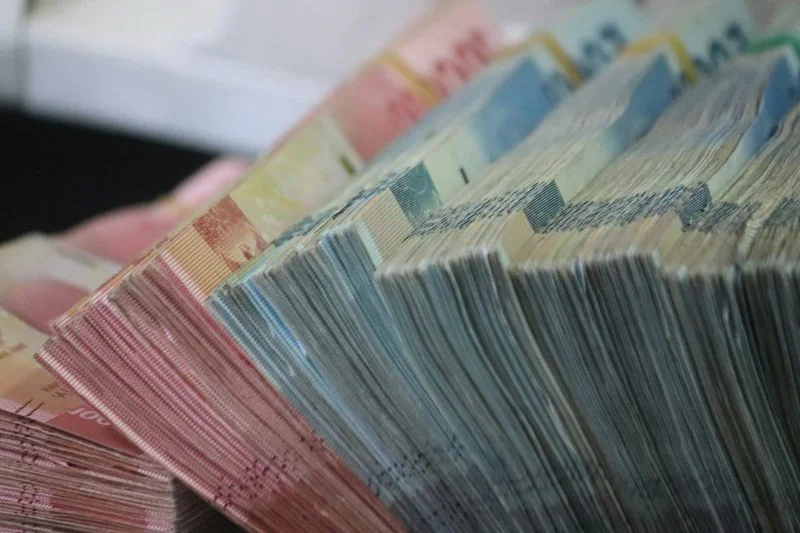
Saudi Central Bank (SAMA) has revealed a significant change to enhance the quality of the bank notes of the Kingdom. The new rule is to set a higher sorting threshold requirement on the sorting of physical rupees at commercial banks, exchange houses and cash centres besides maintaining cleaner and durable bank notes in circulation.
The announcement has caused confusion for both residential and business local residents, leaving many people uncertain about the rejection of older and slightly damaged Saudi Riyals. An encouraging piece of news is that SAMA has confirmed the legality and validity of Saudi currency. The new plan is simply a system that will gradually eliminate heavily damaged notes for a systematic procedure.
Four New Banknote Classification Categories
Financial institutions need to update their automatic cash sorters to distinguish the banknotes into four quality categories as part of the regulations set in place in 2026.
One type of note is circulatory fit, meaning that it’s suitable for circulation in its current condition to be used immediately at ATMs and teller counters. The second includes those notes that have been somewhat worn but would still be good for distribution without compromising the security features or readability.
The third category are notes which are still acceptable in spite of being slightly damaged. The fourth and final category is of severely damaged notes, which will be withdrawn and safely destroyed by the Saudi Central Bank.
What Makes a Banknote Unfit?
SAMA has given clarity to the standard setting out the criteria by which a banknote must be taken out of circulation.
Notes containing excessive dirtiness and/or very extensive stains (which are larger than 15 x 15 mm), handwritten marking/drawing/defacing symbol etc. will be defined as unfit. Large holes, punches, significant tears, over-folded banknotes or adhesive tape, will be removed via the banking system as well.
The measures are aimed at enhancing the quality of cash and ensuring trust in Saudi Arabia’s currency.
Implementation Timetable
The new rules will be phased in so that banks and businesses have time to adapt their cash handling process.
The enforcement of stricter quality checks by commercial banks on sixth-edition banknotes with denominations SAR 50, SAR 100, SAR 200 and SAR 500 notes will begin on July 14, 2026.
The updated standard also applies to SAR 5, SAR 10 and SAR 20 notes in the second phase, which will start on 15 November 2026. This is phased after which the risk of disruption is restricted and the transition is phased over the financial system.
What Does This Mean for Consumers?
Most significantly, the note to take home is that SAMA isn’t ending the printing of older notes in the Saudi Riyal. This is still true of all pre-eminion banknotes sold in any form of legal tender.
You may still visit any exchange house or commercial bank branch, if you have a broken, soiled or taped bank note. The institution will accept the note, replace it or credit your account and send the mutilated note to SAMA for destruction in a secure environment.
As improved sorting mechanisms are in full use later this year in 2026, consumers will also see improved and cleaner cash withdrawals when they use ATMs.
FAQs
Are Saudi banks going to cease circulation of old Riyal notes?
With regards to the older Saudi Riyal banknotes, No. SAMA has assured that they are legal tender and will still be accepted by banks and businesses.
Can I pick up the damaged bank notes?
Yes. Any legal banknotes with damage will be accepted by commercial banks and licensed exchange houses which will replace them or cover the value for the damaged banknotes before returning them to SAMA for destruction.
When will the new rules be enacted?
The first phase begins on July 14, 2026, for SAR 50, 100, 200, and 500 notes, while the second phase starts on November 15, 2026, for SAR 5, 10, and 20 notes.
Stay In The Loop
What’s Driving UAE Economic Growth?
Explore how IMF projections highlight the UAE’s strong expansion and regional leadership in the coming year.
Why Is UAE Leading MENA Growth Rankings?
Discover the key factors behind the UAE’s top GDP growth position across the Middle East and North Africa.
How Is Oman Showing Economic Resilience?
Check how Oman’s economy continues to stay stable and resilient despite global financial uncertainties.
Will UAE Banks See Lending Boom?
Explore why UAE banks are expected to witness significant lending growth and financial sector strength.
How Can Expats Manage Money in Dubai?
Discover smart personal finance strategies that help expats save, invest, and thrive in Dubai.


UAE Creates New Government Authority to Enhance Public Services

QSFA Announces Men’s Padel Tournament for November

Kuwait Announces 10-Hour Water Network Maintenance in Four Areas

Beyond Real Estate: 7 Lucrative Investment Opportunities in Dubai

Beyond the Missiles: What the Houthis’ Saudi Airport Attacks Signal?

Dubai Investment Opportunities: Sheikh Mohammed Says Now Is the ‘Ideal Time’ to Invest in Dubai
-

 Reports6 days ago
UAE and Saudi Arabia Seek to Strengthen Rail and Infrastructure Integration
-
 Entertainment6 days ago
Lusail Circuit Opens Volunteer Applications for 2026 MotoGP and Formula 1
-
 Reports6 days ago
Kuwait Urges Unified Global Response to Terrorism and Financing
-
 News6 days ago
Etihad Suspends Riyadh Flights After Houthi Attacks