News
Gulf’s New Strategic Vision: Security, Prosperity and a Future Beyond Conflict

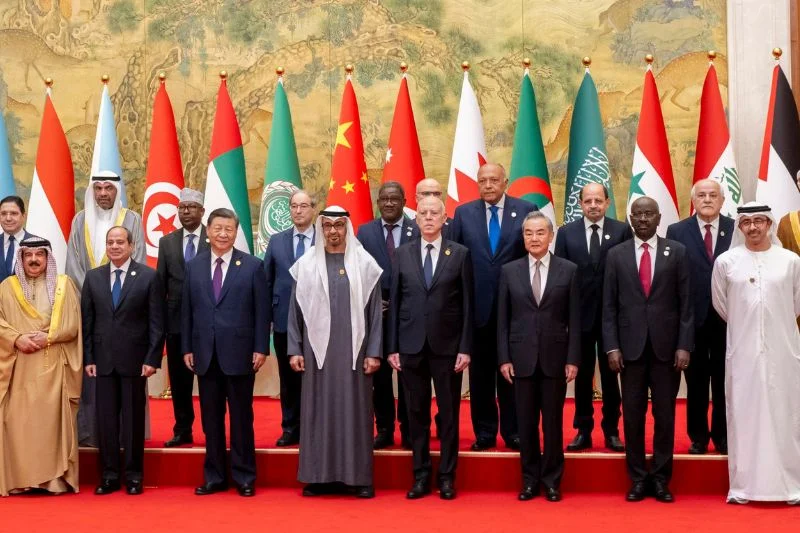
A focus on oil, geopolitics and regional rivalries formed much of the discussion regarding the Gulf for many decades. But today, Gulf nations’ strategic agendas are in constant flux. Tectonic developments, an aging population, global warming, and economic diversification are becoming a key aspect of policy-making decisions throughout the region.
The region is undergoing a significant transformation driven by changing economic realities, demographic shifts, and a growing focus on long-term development.
The Debate Is About Policy, Not People
The difference between regional security and the policy of the Iranian regime is one of the main arguments that have been raised in the region.
In the Gulf there are mainly missile developments, support for proxy forces, maritime threats to security and use of such activities which affect the region’s security concerns. The focus isn’t on the people, culture, or society of Iran, but on the actions and strategic decisions of the ruling force.
With both Gulf governments trying to balance policy moves towards the rest of the region with the very real issue of security, this separation has become even more relevant.
Strategic Ambiguity Is Becoming Harder to Maintain
Many countries in the region tried to pursue several goals at the same time for years: to maintain security links with the United States, to link up economically with other countries and to not take sides in regional conflicts.
But, the geopolitical landscape has grown more complicated. Strategic neutrality is not as easy to maintain in the face of rising tensions, changing security threats, and a new balance of power in the world.
Because the competition amongst all stakeholders in the region is growing, governments are realizing that success over the long-term will require greater strategic clarity and closer collaboration with like-minded partners with shared security and economic goals.
The Abraham Accords Changed the Conversation
The first idea that came up in the foreign debate on the Abraham Accords was diplomatic normalization. However, their general impact is in the economic and technological opportunities they brought.
The Accords established a new format for the trade, investment, innovation, scientific cooperation, tourism and entrepreneurship areas. Instead of addressing issues solely in retrospect, they also made room for future development and collaboration.
The agreements were a paradigm shift for many policy makers from conflict-management to economic integration and regional competitiveness.
The UAE’s Model of Strategic Modernization
The United Arab Emirates (UAE) is a remarkable case among the Gulf states in achieving both transformation in its security policies and transformation in its economy.
This UAE-led strategy has extended national security beyond these premises into the areas of innovation, foreign investment, high-tech advancements, international trade and economic diversification. In this context, normalisation with Israel has been perceived less as a stand-alone diplomatic move and more as part of a multifaceted approach aimed at advancing economic stability and global integration.
This model assumes that long-term stability is tightly linked with the possibility of economic development, technological progress, and world integration.
New Generation Has Different Priorities
One of the most significant drivers of future demographic trends in the region is also the changing proportions of resident working-age adults, and the number of elderly people.
Throughout the Gulf and indeed around the region, the younger generation’s attention is being increasingly drawn to issues of employment, education, innovation, digitalization and entrepreneurship. They may more closely aspire to improving economic prospects or to improvements in quality of life rather than the more traditional ideological lines.
Governments across the region have allocated significant amounts of funding for technology, artificial intelligence, infrastructure development, advanced manufacturing, school overhaul, and start-up creation initiatives.
It’s part of this general shift of thinking on which future competitiveness will rely more, maybe even exclusively, on the capacity to provide opportunities to a very dynamic population, which is more and more connected.
The Future of the Gulf
The overall strategic visions of the various regions of the Gulf appear to all be converging around the theme of “stability through development.
Though security-related issues are dominant, it is increasingly acknowledged that sustainable influence goes beyond military strength and energy resources to include economic strength, technological leadership and development of human capital.
But as the region continues to change, there may be more rivalry for who’s building up the most innovative, prosperous, opportunity-rich societies for future generations, than for territory or ideology.
At that level, it may be easier to answer the Gulf states “what” question than the toughest to answer is: What they want is more stability, more economic wealth, more global integration and a more peaceful, not bellicose and different, future, one expects.
Explore More Must-Reads
What Drives Vision 2030 EV Growth?
Explore how electric vehicles are shaping a greener GCC future under Saudi Arabia’s Vision 2030 initiatives.
Which Mega Projects Lead Vision 2030?
Discover the most ambitious mega projects transforming Saudi Arabia’s landscape and economy.
How Budget 2026 Supports Vision 2030?
Check how Saudi Arabia’s 2026 budget fuels growth and revenue under Vision 2030 plans.
How Vision 2030 Changes Gulf Jobs?
Explore how Vision 2030 is reshaping job markets and career opportunities across the Gulf region.
What Defines Riyadh’s Vision 2030 Lifestyle?
Discover how urban development is transforming lifestyle and living standards in Riyadh.


Nobel Prize 2026 Winners Full List Categories and Achievements

From Abu Dhabi to Brussels: Europe’s Growing Focus on the Muslim Brotherhood and Cross-Border Security

Top 10 Staycations and Overseas Trip Options for UAE Families During Nine Day Half Term School Break

UFC Fight Night Doha Tickets Go on Sale: Guide on Ticket Price, How to Buy Tickets and Attend the Event

Saudi Aviation Authority Confirms 1 Dead, 11 Injured on Sunday Riyadh Airport Attack

UAE Flight Suspensions Extend Across Saudi Arabia
-

 Reports3 days ago
UAE and Saudi Arabia Seek to Strengthen Rail and Infrastructure Integration
-
 Entertainment3 days ago
Lusail Circuit Opens Volunteer Applications for 2026 MotoGP and Formula 1
-
 Reports3 days ago
Kuwait Urges Unified Global Response to Terrorism and Financing
-
 News3 days ago
Trade Deal Talks Concluded Between UAE and Thailand