News
New Saudi Self-Driving Car Regulations Just Released: Who Gets Fined If An Autonomous Vehicle Crashes?

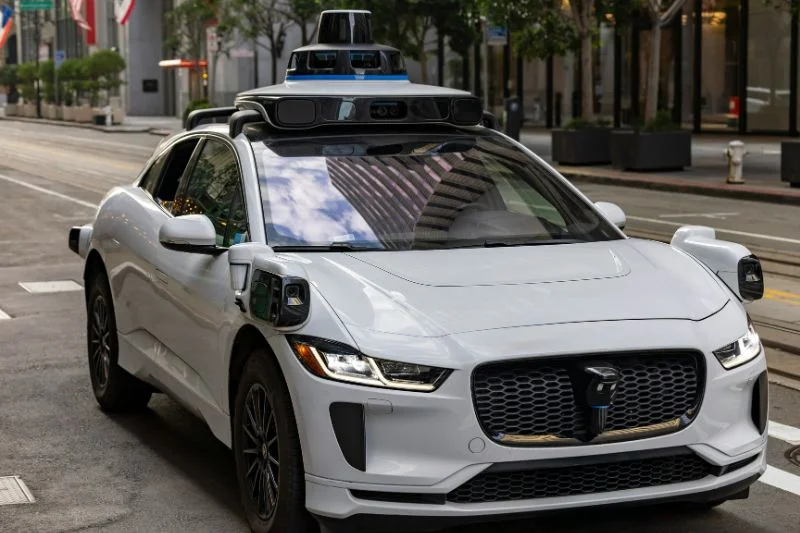
One of the world’s largest efforts to make mobility ‘smart’ has been made in Saudi Arabia, which now has an all-encompassing legal framework for autonomous driving. The Saudi Ministry of Interior and the Transport General Authority (TGA) have approved the new Executive Regulations of the Traffic Law which lay out clear regulations for the driving, ownership and legal liability of self-driving vehicles.
Finally some answers to the greatest dilemma facing autonomous driving: Who is held legally accountable if it strays from traffic or crashes? This will depend on the degree of automation and if human intervention is necessary during the incident.
A Two-Tier Liability Framework
The new regulations split the responsibility into two different streams depending on the amount of Autonomous Technology employed in the vehicle. This helps make insurance companies, the traffic authorities, car manufacturers, and future autonomous mobility operators more certain.
The framework will ensure a clear sense of responsibility in case a human driver is actively supervising the car or the car is causing a driver to supervise it.
Semi-Autonomous Vehicles: The Driver Is Responsible
Any vehicle fitted with driver assistance features that rely on human intervention (typically referred to as SAE Level 1-3 are subject to standard traffic laws.
When the assistance system on a semi-autonomous vehicle is in use, if it violates traffic rules such as running red lights or speeding and an accident occurs, the driver of the car is fully responsible. The fines, black points, claims on insurance and legal repercussions will remain the responsibility of the driver.
The driving prohibition regarding the use of driver assistance functions is restated in the rules as well.
Fully Autonomous Vehicles: The Owner Becomes Liable
Saudi Arabia has adopted another legal method for Level 4 & Level 5 autonomous vehicles, such as future driverless commercial fleets and robotaxis.
If a machine drives without any human involvement and makes all decisions to drive a car, those responsibilities are placed on the registered owner of the car. Violation of the traffic law or crash of the autonomous system will result in fines and penalties for the owner, not the pending driver.
As Saudi Arabia gets ready for more widespread use of autonomous mobility solutions, this owner-based model establishes a clear legal framework.
Additional Compliance Rules
The new rules additionally add conditions of operations and administration for autonomous vehicles during their entire lifecycle.
Without receiving approval from the appropriately trained technical authorities, owners of autonomous vehicles will not be able to deregister or scrap them. This allows for evaluation of onboard systems, software records and black box data to ensure it is adequately evaluated prior to being removed from official databases.
Besides, the systems must also be able to read traffic signs, road reflectors and signals and automatically prioritize the movement of emergency vehicles and official convoys. Fines and other penalties for every other traffic infraction have also been officially applied to owners of autonomous vehicles, such as fines and impoundment of vehicles.
Why Do These Regulations Matter?
As the world of smart transportation continues to develop, Saudi Arabia’s new framework offers much-needed legal clarity. The regulations provide maximum clarity on who is responsible for what in the vehicle driving world, making everything safer for car manufacturers, insurance companies, fleet operators, and road users.
The rules also pave the way for the Kingdom’s broader future of smart mobility goals with the provision of the same legal framework in advance of when fully autonomous vehicles may become commonplace on public roads.
FAQs
What are the implications if a semi-autonomous vehicle is involved in an accident?
The human driver ultimately is the one who is legally responsible. When driver supervision is required, any traffic offenses and accident liabilities still lie with the driver.
Who is responsible for a motorcar fully equipped with autonomy?
The new regulations state that if an unattended fully autonomous vehicle that is completely driverless commits an infraction and/or an accident occurs, the owner of the registered vehicle is liable.
Should self-driving cars know their own way through the traffic of cars which are in an emergency?
Yes. The rules stipulate that an autonomous driving system must detect and place a special emphasis on official convoys and emergency vehicles and accord them top priority, and in turn, comply with all traffic signs and road signals.
Discover more Insights
Explore UAE driving license rule changes?
Check the latest fines, updates, and digital shifts in UAE driving laws.
Discover best Makkah airport car rentals?
Explore top car rental services available at Makkah airport for travelers.
Explore Abu Dhabi to Qatar road trip?
Discover route details, tips, and travel essentials for this Gulf journey.
Check Manama airport car rental options?
Explore convenient car hire services at Manama International Airport.
Discover Kuwait traffic fines and rules?
Check updated penalties and new driving regulations in Kuwait.


UAE Creates New Government Authority to Enhance Public Services

QSFA Announces Men’s Padel Tournament for November

Kuwait Announces 10-Hour Water Network Maintenance in Four Areas

Beyond Real Estate: 7 Lucrative Investment Opportunities in Dubai

Beyond the Missiles: What the Houthis’ Saudi Airport Attacks Signal?

Dubai Investment Opportunities: Sheikh Mohammed Says Now Is the ‘Ideal Time’ to Invest in Dubai
-

 Reports6 days ago
UAE and Saudi Arabia Seek to Strengthen Rail and Infrastructure Integration
-
 Entertainment6 days ago
Lusail Circuit Opens Volunteer Applications for 2026 MotoGP and Formula 1
-
 Reports6 days ago
Kuwait Urges Unified Global Response to Terrorism and Financing
-
 News6 days ago
Etihad Suspends Riyadh Flights After Houthi Attacks