
News
Kuwait Condemns Israel’s Rejection of Gaza Roadmap: Key Diplomacy Takeaways

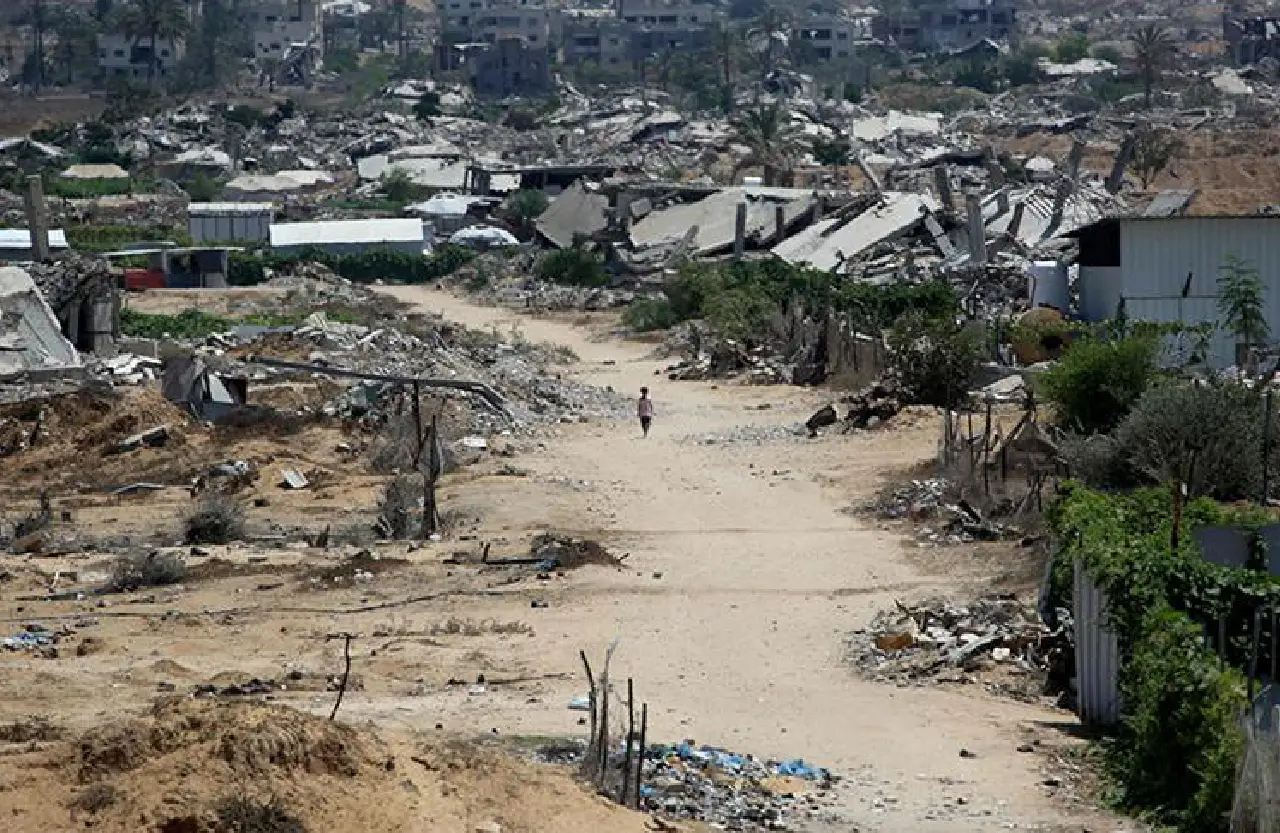
Israel’s public rejection of the roadmap that was meant to be part of US President Donald Trump’s comprehensive plan to end the Gaza war has brought the country into a growing chorus of condemnation from the region. Kuwait’s Ministry of Foreign Affairs stated X on Sunday 16 August stating that Israel’s stance “is a clear denial to move ahead with implementing the comprehensive plan” (SANA).
The declaration was issued a day after eight Arab and Islamic foreign ministers, including Saudi Arabia, the UAE, Qatar, Jordan, Egypt, Türkiye, Indonesia and Pakistan, condemned Israel’s stance, highlighting its swift diplomatic isolation among the plan’s regional backers (Qatar’s Ministry of Foreign Affairs).
Background: What Roadmap Is Being Rejected?
It’s about the roadmap that was endorsed by the UN Security Council Resolution 2803, and which was part of Trump’s comprehensive plan of 20 points to end the Gaza conflict. Just days after U.S. envoy for the peace plan, Steve Witkoff, announced the second phase of the peace plan for Gaza, which features the establishment of a transitional technocratic Palestinian administration, Trump announced the creation of a “Peace Council” for Gaza on January 17, 2026.
The roadmap, which was agreed to by Palestinian groups and hammered out by mediators including Qatar, Egypt, Türkiye, and the US, includes arms decommissioning along with a withdrawal of Israeli troops, deployment of an international stabilisation force, and an administration of Gaza by a National Committee for the Administration of Gaza before the reconstruction phase.
What Kuwait’s Statement Said
Israel’s rejection has “challenged efforts to establish a just and lasting peace, which include collective efforts by Qatar, Egypt, Türkiye, the United States, the Peace Council and all concerned,” said the Foreign Ministry in Kuwait. The ministry urged the international community to ensure Israeli authorities take “full responsibility” to meet their roadmap obligations and not obstruct its implementation in any way.
Kuwait also made the linkage between the implementation of the roadmap and the alleviation of the humanitarian situation in Gaza, saying that full and immediate compliance with the roadmap would help “ensure security and stability, pave the way for reconstruction and recovery and advance a lasting peace based on a basis of Palestinian self-determination.
The Wider Regional Response
Kuwait’s condemnation came on the heels of a joint statement by eight countries the day before. That assertion, from the UAE state news agency WAM, had extended the political dimension, which the UAE ministers emphasised had to be a two-state solution with an independent, sovereign Palestine and East Jerusalem as its capital (Middle East Monitor).
In an independent statement, the Muslim World League also commented, placing Secretary-General Mohammed bin Abdulkarim Al-Issa’s finger on Israel’s “continuation of policies that violate international law and UN resolutions. The combination of the statements tells the tale of a cohesive pro-bloc, made up of Gulf countries, Egypt, Türkiye, Indonesia, Pakistan and pan-Islamic organisations, coming together in the wake of Israel’s action.
Why This Matters
Jordan’s rejection of the roadmap plan might be a wedge issue for the wider peace process, as almost all the main players in the Middle East announced their acceptance of the roadmap simultaneously in a statement from the Muslim World League, the 8-nation bloc, and Kuwait. The names of several of the countries involved are mentioned specifically in the roadmap; they include Egypt, Qatar and Türkiye, and their objections have real significance in determining the next steps in the roadmap. All indications are that the United States will remain involved in this process via the Peace Council as a way of preventing the process from falling apart.
FAQs
Q1. In what position did Israel find itself in relation to Kuwait?
Israel’s rejection of the roadmap and Palestinian statehood is “a setback to the collective peace effort,” Kuwait’s Foreign Ministry said, urging the international community “to pressure Israel into adhering to the comprehensive plan.
Q2. Which other countries protested Israel’s rejection?
The Muslim World League issued a condemnation independently, and Saudi Arabia, UAE, Qatar, Jordan, Egypt, Türkiye, Indonesia and Pakistan jointly condemned it a day before Kuwait’s condemnation.
Q3. What is the “comprehensive plan” the roadmap is meant to complete?
It is a 20-point plan endorsed by UN Security Council Resolution 2803 that aims to end the Gaza war with a Peace Council that will be established in January 2026 to monitor the implementation of the plan.
Q4. What are the steps of the roadmap?
It includes the disarming of weapons and withdrawal of Israeli forces, deployment of an international stabilisation force, transferring administrative authority to a Gaza management committee, and Gaza’s reconstruction.
Ready for Doha’s Biggest Tech Crowd?
Explore how Web Summit Qatar 2026 sold out as thousands head to Doha for innovation and networking.
Curious About UAE at G7 Talks?
Discover why Canada invited the UAE to join key discussions at the upcoming G7 summit.
Interested in Kuwait’s Cloud Innovations?
Check how GBM CloudX launch is shaping the future of cloud technology at Kuwait Innovation Summit.
Want Insights from Dublin Meetings?
Explore what happened during the first Web Summit Qatar 2026 meetings held in Dublin.
Looking at UAE’s AI Global Rise?
Discover how UAE’s AI powerhouse strategy is driving its rapid global technological influence.


Abu Dhabi Introduces My Home is Safe Initiative for New Home Handovers

Damascus Reaffirms Syria Support for Riyadh Amid Houthi Attacks

Qatar Engages in Global Cybersecurity Talks at Singapore Cyber Week

Fujairah Coast Hit by Minor 1.6 Magnitude Tremor

8 Arrested in Dubai Over Dubai Fake Driving Licence Scheme

UNIFYD Music Fest Brings Live Music and Entertainment to Abu Dhabi
-

 Reports1 week ago
UAE and Saudi Arabia Seek to Strengthen Rail and Infrastructure Integration
-
 Entertainment1 week ago
Lusail Circuit Opens Volunteer Applications for 2026 MotoGP and Formula 1
-
 Reports1 week ago
Kuwait Urges Unified Global Response to Terrorism and Financing
-
 News1 week ago
Etihad Suspends Riyadh Flights After Houthi Attacks