News
Pocket Money & Nutrition: How Dubai’s New ‘Skills for Life’ Rule Will Change Your Child’s Curricula

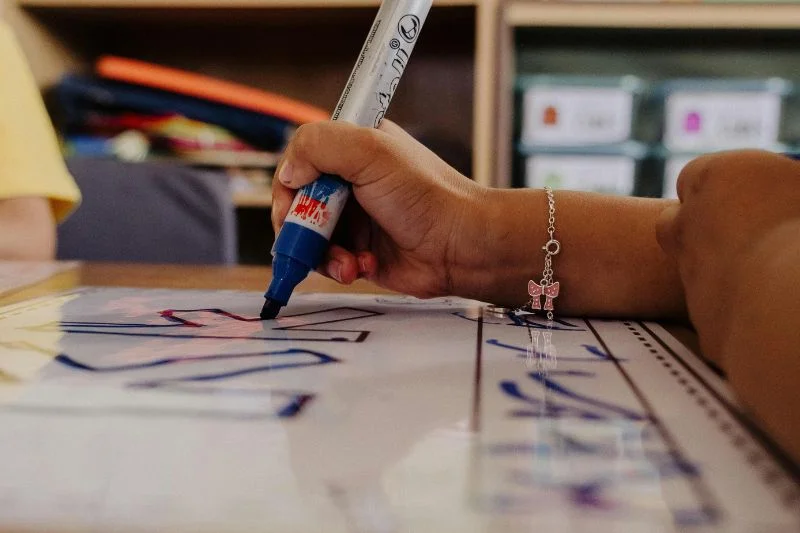
One of the more significant curriculum changes in the UAE in recent years is what Dubai’s education system is now looking forward to. The KHDA has officially announced the launch of a new framework called ‘Skills for Life’ that will make every private school in Dubai implement the integration of skills for life into lessons from the academic year 2026-2027.
The programme was launched by His Highness Sheikh Mohammed bin Rashid Al Maktoum to prepare students for challenges other than in studies. For instance, boys’ and girls’ schools are no longer expected to simply concentrate on examination performance but are also tasked with raising financial awareness, emotional resilience, healthy lifestyle and the awareness of appropriate digital citizenship.
What is the Skills for Life Framework?
Skills for Life is a city-wide education programme brought in by the KHDA, with a view to enabling students to leave school equipped with the necessary real world skills in addition to their academic qualifications.
Rent-A-Santa Claus will focus on these life skills without the topic being a specific subject – they will be integrated into lessons, projects, extension and in a natural setting at school. This enables students not just to learn on paper but in real-life scenarios as well.
Why is KHDA Introducing This Change?
Times and institutions are evolving quickly, and more and more employers are looking for communication, problem solving, adaptation and financial responsibility, as well as good grades and strong academic performance.
KHDA is convinced that schools need to be training students not just to get into University but to equip them to be successful adults. This new model motivates children to make informed choices, take responsibilities and build learning behaviours they will need in their personal and professional lives.
Financial Literacy Will Start with Pocket Money
Notably, financial and consumer literacy has been introduced to the framework, one of the most highly discussed features of the framework.
Students will be supported to understand money over a gradual progression of lessons in an age appropriate manner, including budgeting, saving, spending responsibly and value. Younger students can start with talking about chair money and the principles of saving, older students can learn about banking, money and basic economic concepts.
The objective is that students may on their way to adulthood become financially responsible.
Nutrition and Healthy Living Will Become Everyday Lessons
Healthy lifestyle education will also be an important component of school life. Healthy living will not be a concern just once a year but rather part of the routines of the school.
Students can engage in activities to discuss good nutrition, healthy food choices, hydration, movement and the role of healthy lifestyle in general. Behaviour and skills learned in school are expected to have a beneficial impact that will extend beyond school.
Greater Focus on Mental Well-being
Another key strand of the skills for life is mental resilience. Schools will be supported to provide different and positive learning spaces that help students become more aware of their emotions, how to manage when various circumstances occur, build more confidence and develop positive communication skills.
The intent of these lessons is to increase students’ capacity to engage in the challenge and have healthier relationships with teachers, peers and family members.
Digital Responsibility & Sustainability
Good Digital Behaviour is a key part of education as technology is increasingly embedded in learning. Students will be provided with guidance on how to use the internet safely and responsibly; digital ethics, online privacy, and critical thinking at consuming digital content.
In addition to this, sustainability education will foster environmentally responsible decisions by promoting recycling programs, conservation efforts, and climate education campaigns.
How Will Schools Implement the New Curriculum?
There will be flexibility in the way each private school implements Skills for Life in line with the overall expectations set by KHDA.
Some schools could consider incorporating financial literacy into their mathematics content; teacher training could also incorporate nutrition into their science content; or teacher training could offer specific projects that include multiple life skills. The aim is not to add more exams; it’s about meaningful learning.
FAQs
What is Dubai’s Skills for Life framework?
Skills for Life is a KHDA initiative aimed at embedding practical real-life skills (financial literacy, nutrition, mental health, sustainability, and digital responsibility) into normal teaching.
At what point will the new Systems be implemented?
The framework will be rolled out across schools at the start of 2026-27, with schools adopting the new approach alongside existing curriculum.
Could there be a financial education class?
No. Financial literacy is not to be a new or additional topic, but rather must be integrated into current topics/lessons and/or activities.
More Stories You Shouldn’t Miss
Ready for Doha’s Biggest Tech Crowd?
Explore how Web Summit Qatar 2026 sold out as thousands head to Doha for innovation and networking.
Curious About UAE at G7 Talks?
Discover why Canada invited the UAE to join key discussions at the upcoming G7 summit.
Interested in Kuwait’s Cloud Innovations?
Check how GBM CloudX launch is shaping the future of cloud technology at Kuwait Innovation Summit.
Want Insights from Dublin Meetings?
Explore what happened during the first Web Summit Qatar 2026 meetings held in Dublin.
Looking at UAE’s AI Global Rise?
Discover how UAE’s AI powerhouse strategy is driving its rapid global technological influence.


Abu Dhabi Introduces My Home is Safe Initiative for New Home Handovers

Damascus Reaffirms Syria Support for Riyadh Amid Houthi Attacks

Qatar Engages in Global Cybersecurity Talks at Singapore Cyber Week

Fujairah Coast Hit by Minor 1.6 Magnitude Tremor

8 Arrested in Dubai Over Dubai Fake Driving Licence Scheme

UNIFYD Music Fest Brings Live Music and Entertainment to Abu Dhabi
-

 Reports1 week ago
UAE and Saudi Arabia Seek to Strengthen Rail and Infrastructure Integration
-
 Entertainment1 week ago
Lusail Circuit Opens Volunteer Applications for 2026 MotoGP and Formula 1
-
 Reports1 week ago
Kuwait Urges Unified Global Response to Terrorism and Financing
-
 News1 week ago
Etihad Suspends Riyadh Flights After Houthi Attacks