
News
Saudi Arabia’s Hajj Airlift Plan 2026: 12,000 Flights Across 6 Airports to Move 3.1 Million Pilgrims

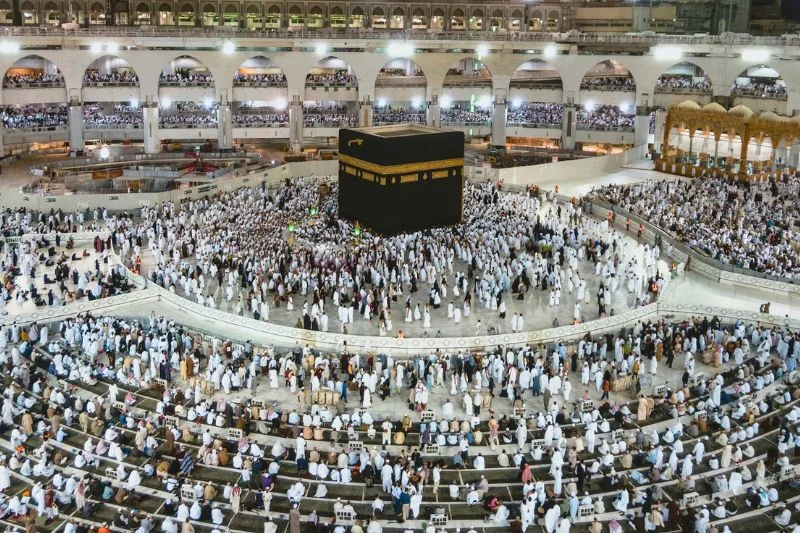
The General Authority of Civil Aviation (GACA) has validated their Hajj 2026 airlift strategy in full scale as Saudi Arabia reveals one of the biggest aviation operations in modern history. Through a well-planned system of flights, airports, and ground users, the Kingdom is ready to accommodate 3.1 million pilgrims as an important milestone within the framework of Vision 2030.
Having more than 12,000 flights, the project represents the increasing ability of Saudi Arabia to manage significant religious tourism along with its safety, efficiency, and smooth travel of passengers.
Airlift Record Breaker by the Numbers
The 2026 Hajj operation is characterized by its large magnitude and accurate planning. GACA has assigned inbound and outbound routes to over 3.1 million seats and this has been possible due to the 22,000+ aviation and ground personnel, which are present all over the country.
This huge mobilization is aimed at controlling the high traffic of travel between April 18 and May 19 when most of the pilgrims come. The government is considering the reduction of congestion, shortening of wait time, and ensuring a high level of operational control in the process.
This level of work makes Saudi Arabia a world leader in the organization of dense and time-intensive air traffic.
6 Strategic Airports
Unlike in the past years, when most of the traffic was limited to Jeddah and Madinah, the 2026 proposal has made arrivals at six major airports to relieve congestion and enhance efficiency.
These 6 strategic airports are as follows:
- The King Abdulaziz international airport is still the main port of entry of pilgrims to Makkah.
- Prince Mohammad bin Abdulaziz International Airport to the Prophet Mosque comes first.
- King Khalid International Airport deals with global and domestic flights.
- King Fahd International Airport serves both the area and GCC travelers.
- Taif International Airport is a strategic overflow center.
- Prince Abdulmohsin bin Abdulazize Airport concentrates on regional flights and charter flights.
This decentralized system will result in a more organized movement of people and fewer delays at historically overcrowded terminals.
National Carriers Capped Step Up Capacity
The aviation sector in Saudi Arabia is central towards the implementation of this plan. The national carrier, Saudia is also making significant contributions of more than 1 million seats, which it will address using its increased fleet.
In the meantime, once again low-cost carrier Flynas is predicted to carry above 147,000 pilgrims in 20 global locations and depicts the impact of low-cost airlines on pilgrimage travel.
This group of airlines is making sure that pilgrims of different economic statuses have access.
The “Baggage-Free” Innovation
Another evident enhancement to Hajj 2026 is the so-called baggage-free traveler program. This service will enable pilgrims to have their luggage delivered to their lodging in Makkah or Madinah country, without the need of carrying it with them.
The system saves a lot in terms of congestion at arrival terminals by eliminating the need to collect baggage at airports. It also improves the general travelling experience particularly amongst ageing pilgrims and groups.
This invention is an indicator of the interest of Saudi Arabia in incorporating technology to ease pilgrimage logistics.
Operational Focus: Flexible, Efficiency, and Safety
The GACA has put down the focus on the flexibility of operations as one of the priorities to the Hajj season this year. Real-time flight tracking systems will monitor flight movements, passenger movements and the airport performance 24 hrs.
Special units will communicate directly with aircraft, land services, and law enforcement agencies to make sure there are smooth transitions between air flights, immigration, and transportation.
This is a combined policy that is critical when it comes to the operation of one of the most complicated aviation processes in the world.
Don’t Miss These Stories
What’s Driving GCC Luxury Travel Boom?
Explore the rise of hyper-luxury travel trends shaping GCC tourism in 2026.
How Is GCC Embracing Eco Travel?
Discover eco-friendly journeys and sustainable tourism trends across the GCC region.
Are Dubai Flights Facing New Changes?
Check live updates on flights, delays, and airspace alerts at Dubai Airport.
Which Dubai Resorts Offer Easy Transfers?
Explore luxury resorts in Dubai that provide seamless airport transfer services.
Where To Track GCC Event Updates Fast?
Discover top sites for real-time GCC event cancellations and schedule updates.
Future of Hajj Travel and Vision 2030
The 2026 airlift plan vividly shows the vision of Saudi Arabia Vision 2030 of improving the Infrastructure of religious tourism. Through capacity building of airports, enhancing logistics and smart travel solutions, the Kingdom seeks to be able to host even more pilgrims in the years to come.
This revolution is not only about size- it is about providing people with a safer, quicker and more comfortable pilgrimage experience.
FAQs
What is the number of flights considered to take place at Hajj 2026?
The Kingdom of Saudi Arabia has planned more than 12000 trips including those of commercial flights and charters in order to handle pilgrim trips.
What number of pilgrims will 2026 have?
The Kingdom is geared to host about 3.1 million pilgrims in the hajj season.
What airports are being used to arrive at Hajj?
They are operating six airports: Jeddah, Madinah, Riyadh, Dammam, Taif, and Yanbu, making sure to distribute the traffic of passengers better.


Dubai 7s 2026 Tickets Go on Sale: Dates, Prices and How to Book

Qatar Names 243-Athlete Team for Aichi-Nagoya 2026 Asian Games

The Mecca Defence Pact Is Built on Convenience. Can It Last?

H.H. Sheikh Mohammed Visits ADIHEX 2026, Celebrating UAE Heritage, Hunting and Equestrian Culture

Makkah Defense Pact: Strategic Committee to Hold First Meeting in Istanbul

UAE Expands Gaza Relief Efforts With New Aid Convoys Under Operation Chivalrous Knight 3
-

 News1 week ago
Global Humanitarian Leaders Gather in Dubai to Shape Future of Aid Ahead of DIHAD 2026
-
 News6 days ago
MBS and Macron Chair First Saudi-French Strategic Partnership Council Meeting in Paris
-
 Entertainment1 week ago
A Parent’s Guide to Visiting Panda House Park in Al Khor
-
 Reports1 week ago
UAE and Egypt Strengthen Energy Partnership With New Drilling Plans