
Entertainment
Top 5 Astrophotography Spots in the Gulf to Capture the Milky Way This Weekend

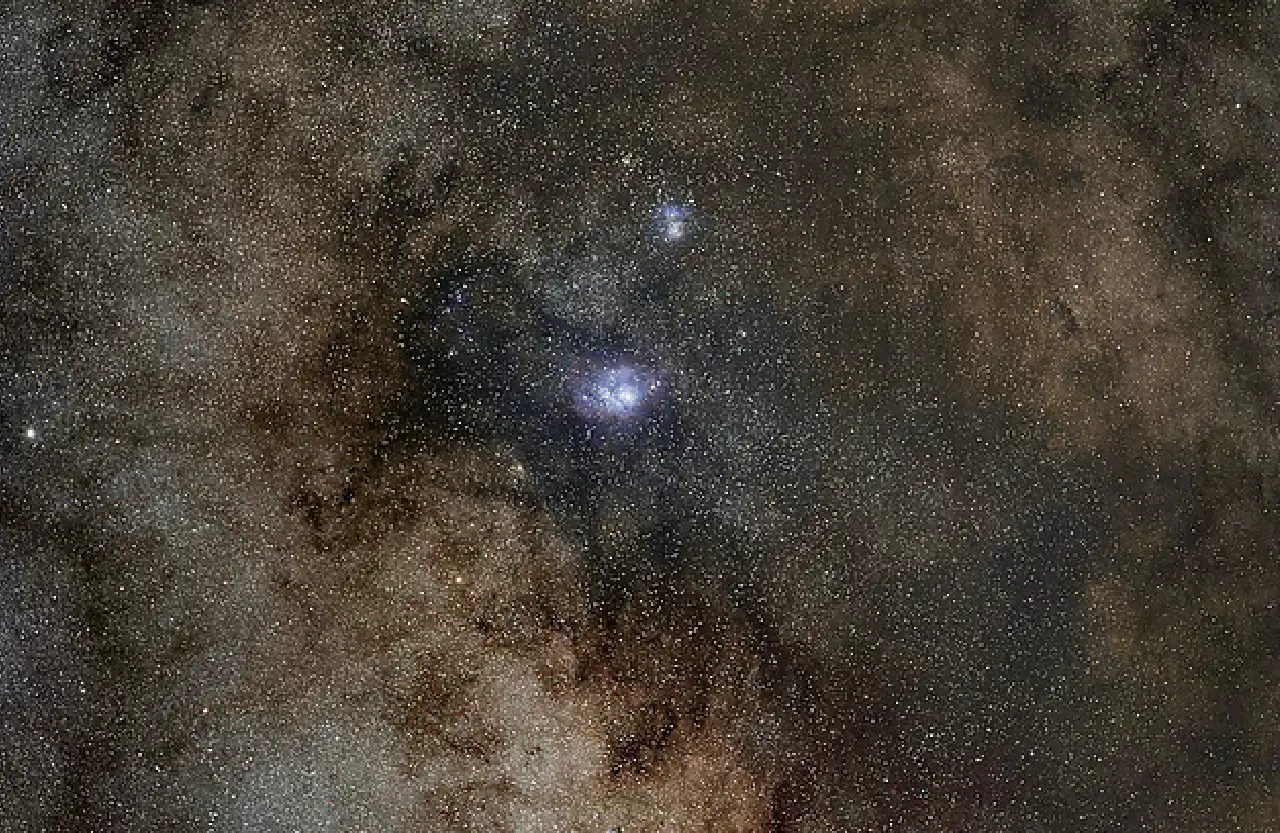
The dark desert skies make for fantastic astrophotography from early August until late August, when it may be crowded out by the mating season of the spring-blooming wildflowers. When shooting from a remote location away from the brighter light of big cities the stars come into focus around the stars of Sagittarius offering fantastic night sky landscape photography.
Be it a rock formation in Saudi Arabia or mountains in Oman, the natural scene in Qatar, the choice of foregrounds is extraordinary.
1. AlUla and Gharameel, Saudi Arabia
The Gharameel zone in AlUla is one of the most fascinating places to capture the night’s sky. The singular sandstone columns against the very dark nightscape provide for an amazing contrast against the Milky Way.
The direction in which photographers should face to capture the galactic centre is to the south/southwest. You may be able to focus the brilliant Sagittarius area between the showpiece rock formations using a low tripod position.
2. Al Quaa Desert, Abu Dhabi
One of the more famous spots in the UAE that gets away from the light illumination of Abu Dhabi is the Al Qaeda “Dark Spot” desert. As this is quite a remote area, the horizon is darker than usual and you will have far greater views of the night sky.
Natural leading lines can be provided by the surrounding dunes. The terrain is full of desert roads, so a 4×4 is recommended, and the best time for driving in is before it gets dark so it is safe to select the best shooting site.
3. Musandam and Jabal Harim, Oman
The Musandam Peninsula in Oman is a wild and scenic part of Oman that has “extraordinary” astronomically dark skies. Rising above 2000 metres, Jabal Harim provides elevated vantage points to help minimise atmospheric haze to allow clearer views at night.
For taking the Milky Way with the mountain landscape, good to use is a wide-angle lens from 14mm to 24mm. Further, the photographer should be ready for cooler weather at higher points of elevation.
4. Al Salmi Desert, Kuwait
Al Salmi is frequently visited by lunar and amateur astronomers from Kuwait for its darker skies, away from Kuwait City. Often the sky overhead can be a great photographic opportunity even if some artificial light sources are still visible on the horizon far away.
By shooting when the Milky Way is further up in the sky it is possible to reduce the impact of further light pollution. Close attention to detail, and a stable tripod, are important.
5. Khor Al Adaid, Qatar
One of the most unique and out of the ordinary astrophotography compositions for the region is Khor Al Adaid, or Qatar’s Inland Sea. Lots of dunes and beautiful calm sea water with chances to capture images of both the milky way and its reflection.
The best times to take the photos are on a clear, calm night, and getting close to the shoreline. In combination with stars and dunes, images of the landscape can be particularly remarkable.
Recommended Camera Settings
Try using a wide aperture (f/1.8–f/2.8), an ISO of 3200–6400 and a shutter speed of about 13–20 seconds for most full-frame cameras. The focus should be set carefully near infinity and a white balance setting in the 3800K to 4200K will result in natural-looking night-sky colours.
The specific settings will vary with the camera, lens and level of darkness. Make multiple test exposures and constantly change ISO and shutter speed to prevent excessive noise and star trails.
FAQs
What time of year is best to try and photograph the Milky Way?
The best time is determined by the location of the Milky Way, local conditions, and moonlight. Unless the air is extremely polluted, it is likely that a dark moonless or low moon night will enable staging in a darker and more conducive environment.
What is the best region in the Gulf for first timers?
Al Quaa is a good option for UAE photographers as it provides access to the desert environment which is relatively easy to reach, while not being so far as it would be away from the light pollution from the main city.
Which lens would you use for Milky Way photos?
The best lenses for landscape astrophotography include a fast wide angle (from f/2.8 to f/2.2 and faster) ranging from 14mm to 24mm.
Ready for Doha’s Biggest Tech Crowd?
Explore how Web Summit Qatar 2026 sold out as thousands head to Doha for innovation and networking.
Curious About UAE at G7 Talks?
Discover why Canada invited the UAE to join key discussions at the upcoming G7 summit.
Interested in Kuwait’s Cloud Innovations?
Check how GBM CloudX launch is shaping the future of cloud technology at Kuwait Innovation Summit.
Want Insights from Dublin Meetings?
Explore what happened during the first Web Summit Qatar 2026 meetings held in Dublin.
Looking at UAE’s AI Global Rise?
Discover how UAE’s AI powerhouse strategy is driving its rapid global technological influence.


Nobel Prize 2026 Winners Full List Categories and Achievements

From Abu Dhabi to Brussels: Europe’s Growing Focus on the Muslim Brotherhood and Cross-Border Security

Top 10 Staycations and Overseas Trip Options for UAE Families During Nine Day Half Term School Break

UFC Fight Night Doha Tickets Go on Sale: Guide on Ticket Price, How to Buy Tickets and Attend the Event

Saudi Aviation Authority Confirms 1 Dead, 11 Injured on Sunday Riyadh Airport Attack

UAE Flight Suspensions Extend Across Saudi Arabia
-

 Reports3 days ago
UAE and Saudi Arabia Seek to Strengthen Rail and Infrastructure Integration
-
 Entertainment3 days ago
Lusail Circuit Opens Volunteer Applications for 2026 MotoGP and Formula 1
-
 Reports3 days ago
Kuwait Urges Unified Global Response to Terrorism and Financing
-
 News3 days ago
Trade Deal Talks Concluded Between UAE and Thailand