News
UAE–U.S. Relations: From Dependency Narrative to Strategic Economic Partnership

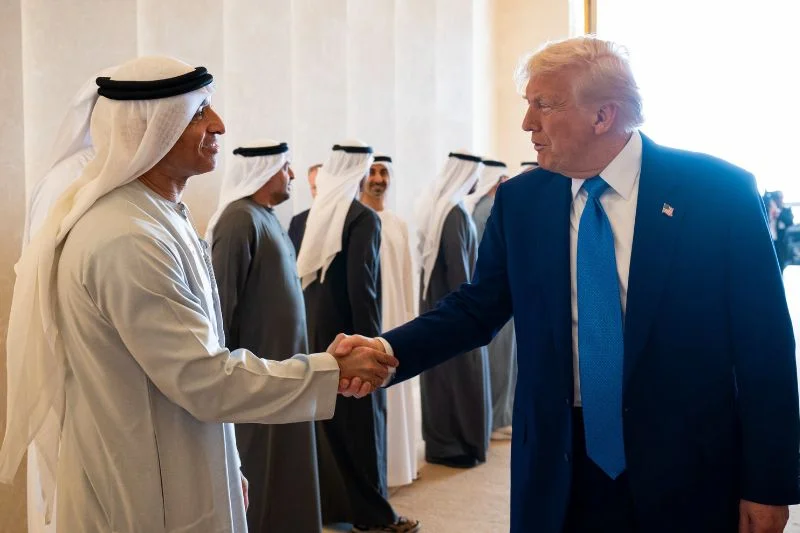
The dynamics between the UAE and the US has been misconstrued in an archaistic view of dependency. That framing does not give back our reality. In its place has come a paradigm of mutual investment, mutually confident strategic trust and joint economic strength, an interdependent relationship between two high capacity actors, influencing world markets.
Perception to Reality: A Reframe Strategy
New visibility of U.S. leadership, such as Donald Trump statements, only highlights the latest move that is already in progress: the UAE is not a fringe player, but a core economic force.
This validation is important at the top. It indicates recognition at the top-most levels that UAE is a financially independent state with global influence- not as a state on the receiving end but as a source of capital, stability and long-term investment.
The characterization of this relationship as dependency is not only misleading–it is downright intellectually incorrect.
Financial Sovereignty at Scale
The financial independence of the UAE is at the heart of its stance. Having over 2 trillion sovereign assets, the country has established one of the strongest investment ecosystems globally.
This depth of capital gives us the boost of staying afloat in turbulent international markets and the ability to engage strategically in the long term across industries and location. It is not passive wealth but active, worldwide-spread with purpose capital.
Capital as Influence
The UAE alone has already invested more than $1 trillion in the United States economy in terms of infrastructure, technology, energy and real estate. They are not symbolic investments, but formative contributions which sustain jobs, innovation and growth in the United States.
This capital movement is a true representation of the fact that UAE is a net investor in the world. It has an economic presence far beyond its borders which makes its presence more solid as a stabilizing and enabling force in international markets.
Interdependence, Not Dependency
The current state of the U.S.–UAE relationship is interdependence. Both economies benefit. Both do not depend on aid. They each have unique capabilities; financial capital, technological innovation, access to markets and geopolitical location that are mutually reinforcing to form a long term, stable partnership. It is not a hierarchical relationship. It is a union on the basis of shared interests and value creation.
A Future-Oriented Alliance
In the future, the trend is obvious. The UAE and the US have an opportunity to further strengthen their collaboration in the new areas: AI, clean energy, advanced manufacturing, and digital infrastructure.
They are long-term investments, which would characterize global competitiveness in the next few decades. The alliance is not fixed but is developing in a purposeful manner.
Locking in the Reality
The story should go along with facts on the ground. Today the United Arab Emirates is a financially independent country that boasts of a large amount of investment power in the global arena with over $2 trillion of sovereign assets. It does not act in the peripheral role of the global economy but rather plays a central role due to its status as a net exporter of capital and long term strategic investor in major markets.
In the United States, the UAE has proven itself as one of the key players in the economy with more than 1 trillion invested in areas that support growth, innovation, and employment. Such an involvement indicates a partnership that can not be characterized by dependency, but by quantifiable economic influence and prolonged monetary dedication.
The U.S. and the UAE relationship is fundamentally based on strategic trust and mutual benefit. Both powers have strong stances to position their countries in and this brings complementary assets that enhance parallel economic and geopolitical aims. This dynamic is interdependence as it is, with value flowing both ways, without aid or one-sided support.
In the future, the trend of this alliance is well founded in collaboration as opposed to aid. The emphasis is on long term cooperation in future and disruptive industries such that both economies would keep on expanding with each other whilst defining the future of world investment and innovations.
Don’t Miss These Stories
How Trump Iran strategy impacts UAE?
Explore how geopolitical strategies are influencing UAE defense and regional stability.
Why UAE leading global AI race?
Discover how the UAE’s AI powerhouse strategy is driving its rapid global rise.
Which Mega Projects Lead Vision 2030?
Discover the most ambitious mega projects transforming Saudi Arabia’s landscape and economy.
How Budget 2026 Supports Vision 2030?
Check how Saudi Arabia’s 2026 budget fuels growth and revenue under Vision 2030 plans.
How Vision 2030 Changes Gulf Jobs?
Explore how Vision 2030 is reshaping job markets and career opportunities across the Gulf region.


UAE Flights Today: Latest Cancellations, Delays and Schedule Changes at Major Airports

US Approves Possible Sale of 48 F-35 Fighters to Saudi Arabia

Kuwait Army Chief Joins Paris Meeting on Lebanon’s Security

Dubai Announces New Standards to Improve Workers’ Accommodation

Indian PM Modi and UAE President Sheikh Mohamed Discuss Ways to Deepen Strategic Partnership

Museum Effect: How Abu Dhabi Is Redefining Soft Power?
-

 Entertainment1 week ago
Where to Watch Practical Magic 2 in Dubai and Abu Dhabi: Best Cinema Experiences
-
 News1 week ago
UAE President Welcomed With Official Reception at Villa Borsig in Berlin
-
 Reports1 week ago
UAE and Germany Launch Strategic Dialogue as New Agreements Are Signed
-
 Reports1 week ago
Saudi FM Faisal bin Farhan Joins International Space Summit in Paris