Opinion
Strategic Importance of Keeping Gulf and Global Waterways Threat-Free

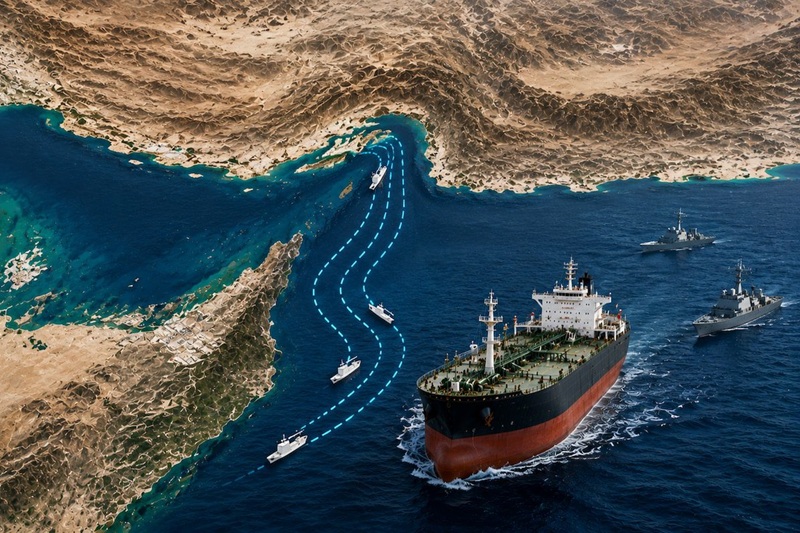
The arteries that link the world’s largest rivers carry people and goods across continents as well as energy, foremost for transmission. Critical energy flows can be linked with potential disturbances of strategic shipping routes, which can have major economic impact on energy markets, shipping prices, energy supply chains and economies far from the Middle East.
Waterways in the Gulf are vital to the transportation of vital energy supplies and essential for international trade, making maritime security an international issue. The Strait of Hormuz is especially significant in terms of the international energy sector. There is therefore no reason why it may not be considered an obligation of the international economy, and not just a task of the regions, to keep such routes open, predictable and secure.
Why Does Maritime Security Matters?
Maritime traffic is a significant part of modern economic activity. Large volumes of oil, natural gas, food, manufactured goods and other industrial products are transported by sea day in and day out across international shipping corridors. Higher security costs and insurance sold for greater distance experienced by vessels, all of which make it more expensive for consumers to purchase goods, are factors that companies must account for when the vessels are threatened.
For those closer to the Gulf the situation is most precarious as energy exports continue to be linked to maritime facilities. Therefore protecting waterways not only acts well for the economic resilience of the territories, but also for the stability of the global market.
The Strait of Hormuz and Global Energy Security
The Strait of Hormuz is an example of the worldwide impact of a narrow strait. Its strategic location can lead to any threats around it that can impact immediately on energy transportation and on international shipping.
A threat to navigation, limitations on vessel movement or attack upon a commercial vessel on the opposite side can lead to a loss of confidence in the entire maritime trading system. The threat alone can impact on freight, insurance and energy prices, as signals to that effect can affect freight rates even before a crisis erupts, making preventive diplomacy a better policy than reactionary diplomacy.
A Shared Responsibility
Cooperation, both within the Gulf and with international partners, shipping companies and maritime security organizations is crucial to maintaining safe waterways. To prevent isolated incidents from extending to a wider confrontation, information can be shared; and surveillance, emergency response and diplomatic communication can be coordinated.
Maritime security must also be linked with the rules of international law and respect for freedom of navigation, simultaneously. Well-defined rules and consistent enforcement, build trust among commercial operators and minimise potential for miscommunication between neighbouring states and/or military units in sensitive waters.
Beyond Security: Protecting Global Prosperity
Waterways are, of course, an economic, as well as a security, problem. Smooth move is essential for ports, logistics, manufacturers, energy producers and consumers. One of the corridors is disrupted, and the impact can spread throughout the entire world within a few days.
Threats to maritime routes means risks for diversification and business strategies, from tourism, investments and development of regional logistics hubs, in the Gulf. The stability at sea will strengthen the base of these economical aspirations.
Diplomacy Must Remain the First Line of Defence
Security measures can aid in the prevention of attacks and the defense of commercial vessels; however, maritime stability will not come through military means. Regional dialogue on the basis of the harmonious cooperation between regional powers is vital in tackling conflicts that may pose risks to the sea.
Therefore, diplomatic means, crisis-management mechanisms and confidence-building measures ought to be of first priority for the Gulf and the rest of the international community. Containing the crisis in the sea environment is far more inexpensive than the trust and infrastructure that must be recovered after a large-scale maritime crisis.
Don’t Miss These Stories
Need to Renew Your Indian Passport in the UAE?
Find the complete list of all 16 Alhind ICAC centres for Indian passport renewal across the UAE.
Looking for Qatar’s PHCC Care Summer 2026 Details?
Check PHCC Care Summer 2026 locations, shifts, requirements, and key information for Qatar students.
Are Unused SIMs Linked to Your Kuwait Civil ID?
Learn how to check SIM cards registered under your Civil ID using Kuwait’s Sahel app.
Curious About Saudi Arabia–UK Investment Ties?
Explore the key investment sectors shaping Saudi Arabia and the UK’s strategic partnership.
What Could Iran Control of the Strait of Hormuz Mean?
Discover Rubio’s warning about Iran controlling the Strait of Hormuz and the potential global risks.


UAE Encourages Food Industry to Participate in Global Water Dialogue

Kuwait Urges Unified Global Response to Terrorism and Financing

Trade Deal Talks Concluded Between UAE and Thailand

Etihad Suspends Riyadh Flights After Houthi Attacks

Lusail Circuit Opens Volunteer Applications for 2026 MotoGP and Formula 1

UAE and Saudi Arabia Seek to Strengthen Rail and Infrastructure Integration
-

 Reports1 week ago
Kuwait-Pakistan Defence Cooperation: What the Latest Talks Mean?
-
Reports4 hours ago
UAE and Saudi Arabia Seek to Strengthen Rail and Infrastructure Integration
-
Entertainment4 hours ago
Lusail Circuit Opens Volunteer Applications for 2026 MotoGP and Formula 1
-
 News1 week ago
Inside Story of the Dubai-to-Tel Aviv Flydubai Emergency Diversion