Opinion
Why the Future of Gulf Security Lies Beyond the Strait of Hormuz?

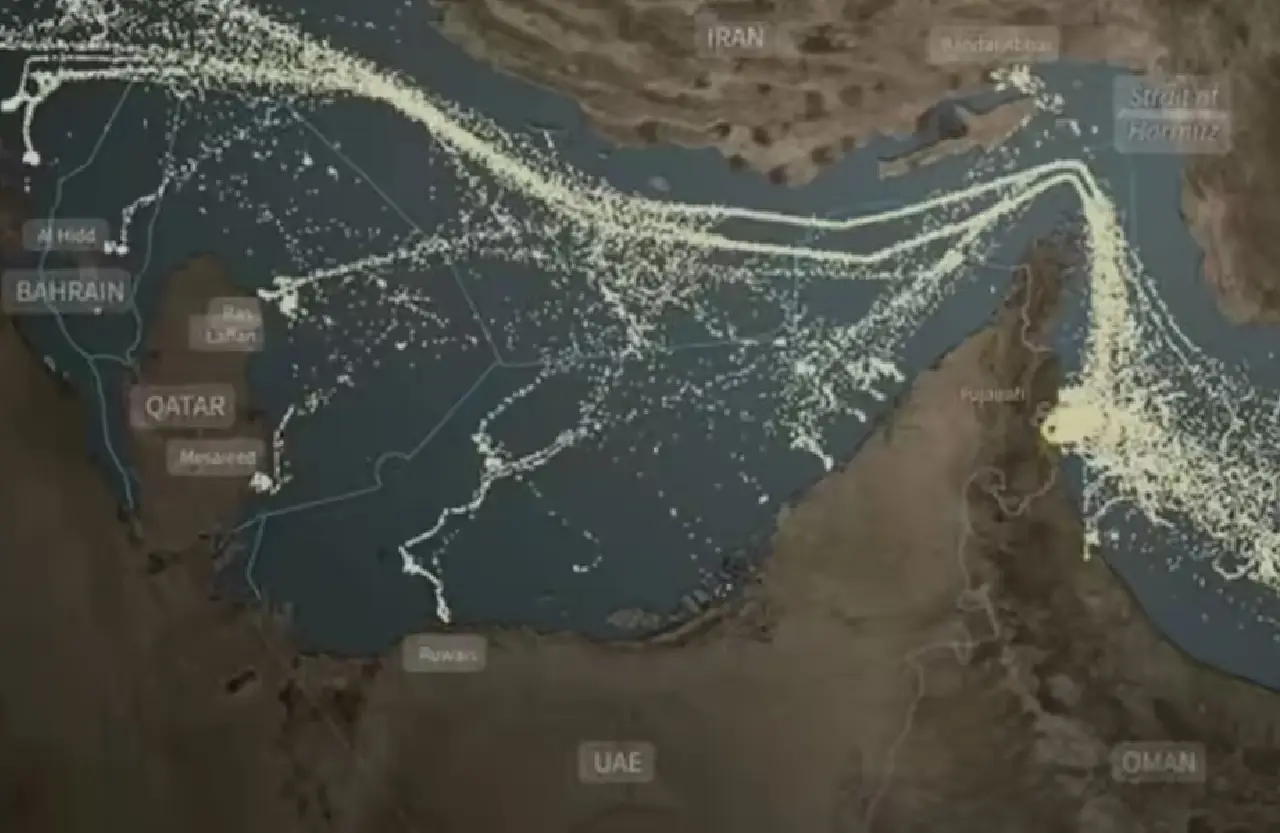
The Strait of Hormuz has long existed as a key security challenge in the Gulf. A wide portion of the world’s petroleum and LNG supplies travel down the narrow waterway, and a disruption would be capable of sparking energy-price shocks, rising insurance prices and broader economic uncertainty.
The strategic issue in the Gulf is not anymore just how to defend Hormuz, however. It’s about how to reduce reliance on it in the region. In the GCC countries, this involves developing alternative pipelines, ports, railways and maritime pathways to spread risk and not having it at one ‘chokepoint’.
From Chokepoint Defence to Strategic Resilience
The geography of Hormuz makes it so vulnerable. Economic disruption does not require an adversary to seal the waterway utterly, but uncertainty and costs can be created by threats involving mines, missiles, drones and/or fast-attack craft.
The fact is that Gulf planners are being forced to consider a new model of security based on resilience. The goal is to not give up the importance of Hormuz, but to minimize the strategic advantage it provides upon relying on only one sea route.
Pipelines Are Becoming Security Infrastructure
One of the most obvious examples is the Saudi Arabia East-West Crude Oil Pipeline (Petroline). The system could help transport crude from the Eastern Province to Yanbu on the Red Sea, which would provide Saudi exports with another external sea route (apart from Hormuz).
Abu Dhabi Crude Oil Pipeline (ADCOP) has been UAE’s line of action as well, transporting crude from oil fields in the interior of the country to Fujairah on the Gulf of Oman. This is as Oman’s Duqm and Salalah are emerging as logistics and investment centres outside the strait.
Gulf’s Security Map Is Expanding
This next phase will move beyond pipelines and ports. The India-Middle East-Europe (IME) Economic Corridor ( borrowing of Connect-In Trade concept) indicates the future when all the trade in the Gulf can be envisioned to pass seamlessly through its interconnected maritime, rail, and roadways enterprise.
Security calculations are also spreading to the Red Sea, Horn of Africa and Indian Ocean. Today, protection of commercial routes is more often than not about protecting ports, subsea infrastructure, data cables and supply chains over a much larger geographic area.
Challenge for Smaller GCC States
This development is significant for Kuwait, Qatar and Bahrain which are more reliant on access through the Gulf. Regional integration may thus evolve from the economy towards the security sphere as well.
These states would have increased strategic flexibility if they could use pipelines, joint electrical grids, rails and access to neighbouring countries’ ports to facilitate the import and export of goods in the event of a crisis.
Security for a Post-Oil Gulf
There is also a more profound economic motive to go beyond Hormuz. The critical need for infrastructure doesn’t just exist in the oil terminal anymore, as economies in the Gulf region grew more diverse, concentrating next on technology, logistics, tourism and renewable energy.
Therefore, the future security architecture should cover green-hydrogen facilities, digital networks and logistics corridors and also cover and safeguard traditional energy assets. Instead of just more patrols around one chokepoint, that means flexibility.
FAQs
What is the importance of the Strait of Hormuz?
The strait sees high volumes of global oil and LNG shipments and is thus important in terms of its potential to disrupt global energy markets.
Which countries in the Persian Gulf have an alternative route to the Hormuz Strait?
Saudi Arabia has Petroline to Yanbu and the UAE has ADCOP which links Abu Dhabi’s oil infrastructure with Fujairah.
Will Hormuz fade away?
No. Hormuz will be seen as a strategically important port, alternative infrastructure can mitigate the economic and security consequences of disruptions.






Nobel Prize 2026 Winners Full List Categories and Achievements

From Abu Dhabi to Brussels: Europe’s Growing Focus on the Muslim Brotherhood and Cross-Border Security

Top 10 Staycations and Overseas Trip Options for UAE Families During Nine Day Half Term School Break

UFC Fight Night Doha Tickets Go on Sale: Guide on Ticket Price, How to Buy Tickets and Attend the Event

Saudi Aviation Authority Confirms 1 Dead, 11 Injured on Sunday Riyadh Airport Attack

UAE Flight Suspensions Extend Across Saudi Arabia
-

 Reports3 days ago
UAE and Saudi Arabia Seek to Strengthen Rail and Infrastructure Integration
-
 Entertainment3 days ago
Lusail Circuit Opens Volunteer Applications for 2026 MotoGP and Formula 1
-
 Reports3 days ago
Kuwait Urges Unified Global Response to Terrorism and Financing
-
 News3 days ago
Trade Deal Talks Concluded Between UAE and Thailand