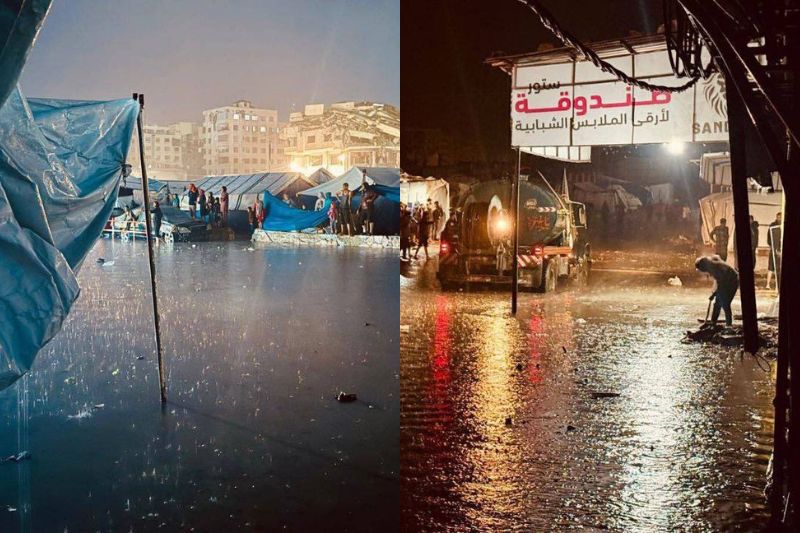
In 2025, heavy rains made the already terrible humanitarian crisis in Gaza even worse. After more than two years of fighting and being forced to leave their homes, seasonal rains have made things worse for hundreds of thousands of people across the Gaza Strip. The rains have turned weak shelters into flooded traps, caused buildings to fall, and made health and safety conditions worse.
The rains have made things much worse for people who have already been affected by war, having to leave their homes, and not having enough cover or access to other important help. Many families are living in tents because their homes and a lot of the land around them have been damaged or destroyed. For more news updates, visit our Gulf Independent News page.
How Heavy Rain Is Making the Crisis Worse
Winter storms in the Gaza Strip have caused a lot of rain, floods, and strong winds. These storms have been dangerous for people who have lost their homes and are living in temporary shelters or crowded displacement camps. Tents that don’t have waterproof security are flooded in many places, ruining blankets, mattresses, and other personal items.
Flooding has also caused deaths, as babies and old people die from hypothermia and buildings falling down that had already been made weak by months of bombs and siege conditions.
Help, Shelter, and Ongoing Gaps
The United Nations and other foreign organisations, as well as non-governmental organisations, are working to help, but the crisis is so big that there isn’t enough support. The situation shows that there is an immediate need for long-lasting shelters, emergency coats, blankets, and tarps, especially before more winter storms hit.
Reports on the worsening of Gaza’s infrastructure and the lack of shelters because of damage from the war are important to understand how big the need. This long-term background is very much linked to today’s weather-related problems, like not having the right winter tents and safe housing for families who have been forced to move.
Health Problems, Kids, and Old People
Flooded relocation camps are more dangerous for children and older people. Cold and wet weather makes it more likely to get lung infections, hypothermia, and other illnesses. Health workers and organisations have stressed how important it is to quickly give out blankets, warm clothes, heating equipment, and medical supplies.
Several stories have said that floodwaters that break smelly sewage lines can cause serious health problems, not just in the rain and cold, but also in the water itself. This raises the possibility of outbreaks of gastrointestinal infections or skin diseases.
Conclusion
In 2025, heavy rains in Gaza made the ongoing humanitarian crisis worse by flooding temporary camps, destroying buildings that were already weak, and making health conditions dangerous. Families who have been forced to move are having a harder and harder time because there are not many winterized shelters and help is hard to get. This situation makes it even more clear that we need to be able to freely provide humanitarian aid, strengthen shelters, and work together as a global community to deal with the effects of war and new environmental threats.
Frequently Asked Questions
Q1: Why are heavy rains making the humanitarian situation in Gaza worse?
A1: Heavy rain can cause a lot of problems for people who have been forced to leave their homes. It can flood their fragile shelters, soak their important things, and damage buildings that are already weak from war. It can also make people sick, especially with hypothermia and other diseases.
Q2: How many people in Gaza are harmed by flooding?
A2: UN organizations have found hundreds of places where people have been forced to leave because of the high risk of flooding. This could affect up to 40% of the people living in tents and other damaged areas.
Q3: What health risks do heavy rains bring in Gaza?
A3: Floodwaters can make water and sewage systems dirty, which can cause more water-borne diseases, lung infections, and hypothermia, especially in children and the elderly.
Q4: Are groups that give help doing anything about the crisis?
A4: Yes, while UN agencies and NGOs are giving out tents, blankets, tarps, warm clothes, and dignity kits while pumping out sewage and floodwater, the needs are still much bigger than the goods.
Q5: What needs to be done to make things better in Gaza?
A5: Making sure that humans can’t be hurt by bad weather is very important. This can be done by giving people access to long-lasting shelters that are safe in the winter, medical help, clean water, and aid for rebuilding that lasts a long time.



 Top Stories2 weeks ago