
News
UAE, Iran and BRICS: Why the New Delhi Summit Matters for Gulf Diplomacy?

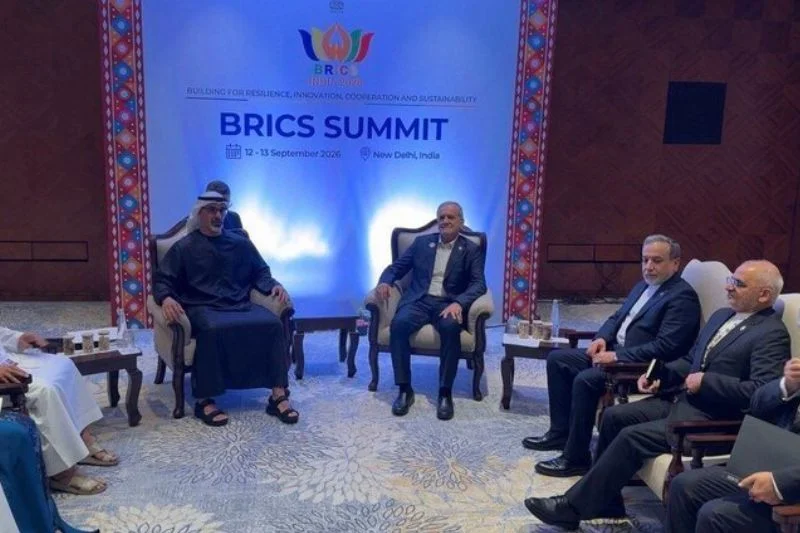
The foremost achievement of the 18th BRICS Summit, New Delhi may not have been another declaration. It was the negotiating process that clearly showed that diplomacy can still work in times of seemingly intransigent geopolitical positions.
Opposing regional issues were the UAE and Iran, but they are united in supporting a stabilizing and restrained attitude to common issues. This is not a way to end the divisions in the gulf, but it is a reminder of the fact that dialogue is still possible when there are interests that meet, at least to a certain degree.
UAE-Iran Compromise Deserves Attention
Reaching consensus was no simple task. The Iranians demanded more specific references to US and Israeli actions, whereas Abu Dhabi was concerned about its security as a focal point of escalatory pressure in the region.
This compromise was successful just because of the fact that they didn’t trap either of the parties into a situation where they had to do all-or-nothing. The declaration’s strong focus on ‘Maximum restraint’, ‘civilian protection’, ‘Sovereignty’ and the UN Charter, allowed for diplomatic breathing room but didn’t force either side to compromise its core position.
The beauty of multilateral diplomacy is that it does not eliminate disagreements, it simply makes them manageable.
Sheikh Khaled and Pezeshkian Put Diplomacy to Work
What was just as significant as the declaration itself was both President Masoud Pezeshkian of Iran and the Crown Prince of Abu Dhabi Sheikh Khaled bin Mohamed’s meeting.
The need for face-to-face diplomacy arises from the fact that regional security has to be handled on the basis of communication more than just through communiqués. Despite the differences of opinion, maritime transportation links Gulf countries and links energy infrastructure and energy supply chains.
In UAE and Iran it’s no longer being friendly to one another anymore it’s about maintaining succession of communication when it comes to the oil supply. It is a matter of national need.
BRICS Is Becoming a Diplomatic Test
Whether cooperation is expanding or quickening with the likes of Iran, Venezuela and Brazil varies by the expanding membership of BRICS, and arguably whether it can translate that into reality. One of the starkest tests for New Delhi came today.
The grouping is a coalition of states that find themselves as partners on the one side and allies on the other when it comes to security concerns, economic and political agendas. It’s a good thing that this diversity is there when it’s harder to reach a decision, but it can also be a good thing when the competition is forced to sit down at the same table.
Gulf Diplomacy Is Becoming More Multipolar
The reorientation of Gulf policy is going more and more down the multipolar route. This New Delhi is symptomatic of a wider shift in Gulf diplomacy. Yesterday was no longer pleasant in regions, where strategic partnerships could simply be divided into adversarial or friendly groups.
This is part of the UAE’s new vision: continuing to maintain security relations, diversify economic ties, maintain diplomatic flexibility and have multiple relations with competing powers at the same time.
It’s particularly apt when strained relations with Iran, the U.S. and other regional powers risk derailing trade and energy routes. A broader diplomatic network will provide more leeway to Gulf states in handling crises before spiraling out of control.
Bigger Lesson for the Gulf
The political division in the Gulf is not likely to be overcome by BRICS or the UAE-Iran dispute is significant. To ignore the New Delhi consensus as a mere exercise of symbolism is to miss its greater meaning.
It turned out that at times, strategic ambiguity is more useful than confrontation. BRICS could emerge into an increasingly useful tool in the hands of Gulf diplomacy if they can continue to find ways to negotiate a compromise and the real benefits of their nations over the same agenda, rather than merely restate each side’s talking points.
For the UAE, perhaps most important of all is its ability to not align itself with one side of the divide, but to create the space from which the two sides can talk with each other.
FAQs
What was important in the New Delhi BRICS Summit for the policy of the Gulf?
A multilateral dialogue was manifested at the summit, which proved that the UAE and Iran were able to serve common diplomatic objectives despite some significant differences among them regarding the region.
What made the UAE-Iran compromise possible?
Through negotiations and direct approach, both sides managed to back statements regarding a call for restraint, civilian protection, sovereignty and international law without giving way to their stance.
What significance did the meeting between Pezeshkian and Sheikh Khaled have?
The meeting opened a direct avenue for discussing the issue of security, maritime stability and economic issues between two neighbouring states, having competing strategic interests.
Discover more Insights
Explore UAE driving license rule changes?
Check the latest fines, updates, and digital shifts in UAE driving laws.
Discover best Makkah airport car rentals?
Explore top car rental services available at Makkah airport for travelers.
Explore Abu Dhabi to Qatar road trip?
Discover route details, tips, and travel essentials for this Gulf journey.
Check Manama airport car rental options?
Explore convenient car hire services at Manama International Airport.
Discover Kuwait traffic fines and rules?
Check updated penalties and new driving regulations in Kuwait.





Qatar Launches National ‘Digitally Aware Family’ Campaign

UAE, Iran and BRICS: Why the New Delhi Summit Matters for Gulf Diplomacy?

Saudi Arabia Supports New Global Alliance for South-South and Triangular Cooperation

Sheikh Khaled and Putin Meet on the Sidelines of the BRICS Summit in New Delhi

Saudi Arabia Reports Two Injured in Latest Houthi Projectile Attack in Jazan Region

UAE and Iran Back BRICS Joint Statement Calling for Restraint Despite Being on Opposite Sides
-

 Trends7 days ago
UAE Schools to Get 9-Day October Break as Dubai Schools Revise Half-Term Dates
-
 Trends4 days ago
iOS 27 Release Date Confirmed: Apple’s New iPhone Update Arrives September 14
-
 Reports7 days ago
Saudi Arabia Opens Security and History Dialogue 2026 in Riyadh
-
 News4 days ago
Bahrain International Airshow Postponed to 2028 Amid Regional Conflict