Reports
From Desert to Development: 7 Turning Points That Transformed Saudi Arabia

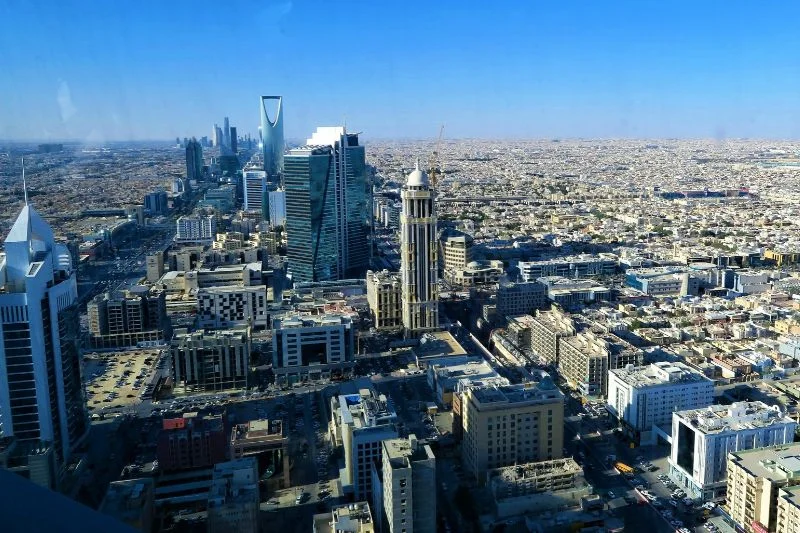
Saudi Arabia has evolved from a desert-based economy, to a world driven energy powerhouse and a fast-expanding hub for technology, tourism and industry. Its economic development and social progress have been influenced by seven turning points since the unification of the Kingdom in 1932 to Vision 2030.
The Kingdom’s transformation started with political unification and the exploitation of huge petroleum holdings.
1. Unification of Saudi Arabia in 1932
The Kingdom of Saudi Arabia is the result of unification of several regions by His Majesty King Abdulaziz Al Saud on Tuesday, September 23, 1932. This formed a central government and led to better political stability.
Prior to unification, trade and revenues from Hajj and Umrah between regions played a significant role in regional economic activity. Preparation of a united state strengthened the national development.
2. Dammam Well No. 7 Changes the Economy in 1938
Dammam Well No. 7 first produced commercial oil March 3, 1938. It was a pivotal moment in the history of any Saudi economy.
Subsequent to these, money from the oil sector financed city growth, roads, ports, electricity, health care and educational institutions. The Kingdom’s impact on the world economy began to take shape as petroleum was established as the basis for its economic strength.
Oil and industrial revenues have served as the drivers of Saudi Arabia’s economic growth. As oil income gradually increased, it enabled Saudi Arabia to invest more in infrastructure and industrial developments.
3. The 1950 Aramco Profit-Sharing Agreement
Saudi Arabia negotiated with Aramco to share any resulting profits in equal parts back in 1950. This allowed the government more of the revenue from petroleum.
Over the following decades, Saudi ownership of Aramco increased until it became 100% state-owned in 1980. These changes improved the Kingdom’s capacity to provide for long-term development and public services.
4. The 1970s Oil Boom and Industrial Cities
Saudi Arabia received a lot of wealth from the rise of the oil price in the 1970s. The state provided investment for infrastructure and started with large scale development schemes.
Industrial district development started to happen including Jubail on the Arabian Gulf and Yanbu on the Red Sea. They expanded the economy beyond oil exports in these projects.
5. Saudi Arabia Joins the WTO in 2005
In December 2005, Saudi Arabia became member 149 of the World Trade Organization. Membership enhanced its ties with an international market.
Accessions also paved the way for regulatory and commercial reforms. These changes had intended to facilitate foreign investments, facilitate the business, and foster non-oil trading.
6. Vision 2030 Launches in 2016
The King unveiled Vision 2030 in April 2016 to lessen the Kingdom’s reliance on oil. The strategy sets out to focus on the tourist sector, technology, mining, renewable energy and growth of the private sector.
The Public Investment Fund has funded some sizable development initiatives, such as NEOM, Red Sea Global, and Qiddiya. All these efforts demonstrate that Saudi Arabia is on the path to diversify its economy.
7. Social and Workforce Reforms From 2018 Onward
In 2018, women were granted the right to drive and in 2019 the incentive of tourist e-visas were introduced. A number of opportunities also emerged within leisure and hospitality due to the growth in cinema and entertainment centres.
More than 33% of the respondents indicated that the role of women in the workforce has been increasing. It is this shift that has facilitated a larger cultural transformation in Saudi Arabia, and has solidified the Kingdom’s goal as becoming a hub for international tourism.
Political unification, oil riches, industrialization, and social reform have defined the history of Saudi Arabia as it has crossed the desert and emerged as a modern economic powerhouse. With the Kingdom still following the pathway related to Vision 2030, it is looking to strike a balance between its energy definition and new growth sources.
Explore More Must-Reads
What Drives Vision 2030 EV Growth?
Explore how electric vehicles are shaping a greener GCC future under Saudi Arabia’s Vision 2030 initiatives.
Which Mega Projects Lead Vision 2030?
Discover the most ambitious mega projects transforming Saudi Arabia’s landscape and economy.
How Budget 2026 Supports Vision 2030?
Check how Saudi Arabia’s 2026 budget fuels growth and revenue under Vision 2030 plans.
How Vision 2030 Changes Gulf Jobs?
Explore how Vision 2030 is reshaping job markets and career opportunities across the Gulf region.
What Defines Riyadh’s Vision 2030 Lifestyle?
Discover how urban development is transforming lifestyle and living standards in Riyadh.





How Much Does Hajj 2027 Cost? 7 Expenses Pilgrims Should Budget For

12 Culture Shocks People Experience After Moving to the GCC

From Desert to Development: 7 Turning Points That Transformed Saudi Arabia

From Dubai to Doha 15 Ways to Celebrate Halloween Across the GCC

8 Eerie Places Across the GCC Surrounded by Mystery and Local Legends

12 Traditional Gulf Snacks That Pair Perfectly With Arabic Coffee
-

 Reports2 days ago
Oman Announces Four-Day Public Holiday for National Day
-
 Reports6 days ago
UAE Foreign Minister Sheikh Abdullah Holds Talks With Russia’s Lavrov
-
 News3 days ago
Oman and UK Forge New Partnerships in Space, Artificial Intelligence
-
 News3 days ago
King Charles Praises Oman’s Peace Efforts in Middle East During Sultan’s State Visit to UK