Engines grind against the sand as trucks roll toward Gaza. Dust coats faces. The smell of fuel mixes with heat, and people rush to catch a glimpse of the convoy. This scene repeats daily under the UAE’s Operation Chivalrous Knight 3. The mission has grown into one of the largest relief efforts across Arab countries. Coverage in Gulf Today and Middle East 24 shows its reach, scale, and persistence.
Origins and Objectives of Operation Chivalrous Knight 3
The UAE launched this third phase after earlier missions proved the need for a continuous pipeline of support. Instead of short-term drops, it was built to run daily, across every channel available.
- Secure steady food and shelter supplies.
- Keep medical services alive with equipment and hospitals.
- Provide safe water through pipelines and tankers.
- Involve youth in aid preparation and delivery.
The plan mixed relief with long-term measures, not just patchwork solutions.
Modes of Humanitarian Aid Delivery
Relief didn’t depend on one route. Trucks, ships, and aircraft all became part of the system. When borders slowed, the sea carried the weight. When seas became tricky, planes took the lead. Each mode had its own challenges, but together they kept the stream of aid flowing.
Land Convoys
Rafah crossing turned into a waiting ground. Truck engines idled for hours in the heat. Drivers leaned out of windows, sweat dripping, as they waited for gates to open. Convoys carried flour, medicines, blankets, tents, and ambulances.
Families on the other side knew the sound of diesel before they saw the dust. That low rumble meant relief was near.
Sea Shipments
The sea carried bulk supplies. Ships such as the “Hamdan” and “Zayed Humanitarian Ship” docked in Egyptian ports, holds packed with thousands of tonnes. Food boxes stacked to the ceiling, medical tents folded tight, heavy machines for clinics lashed to the deck.
Crews spoke of long nights under watch, steering through tense waters until cranes finally lifted the loads ashore.
Airdrops and Emergency Deliveries
When roads were blocked, the sky opened instead. Aircraft under the “Birds of Goodness” program dropped packages with parachutes.
The sound of engines overhead sent people running into fields. Children chased parcels before the wind carried them off. Middle East 24 reported over fifty rounds of drops, each one aimed at families cut off by rubble or closed routes.
Healthcare and Medical Infrastructure Support
Hospitals in Gaza faced collapse. Lights flickered in operating rooms. Beds overflowed. The UAE answered with “Life and Hope” convoys, delivering antibiotics, ventilators, dialysis equipment, and stretchers.
A floating hospital anchored off Egypt opened with Emirati and international doctors treating injuries and chronic illnesses. Patients who had no place left to go found doors open there.
Water and Essential Utilities Initiatives
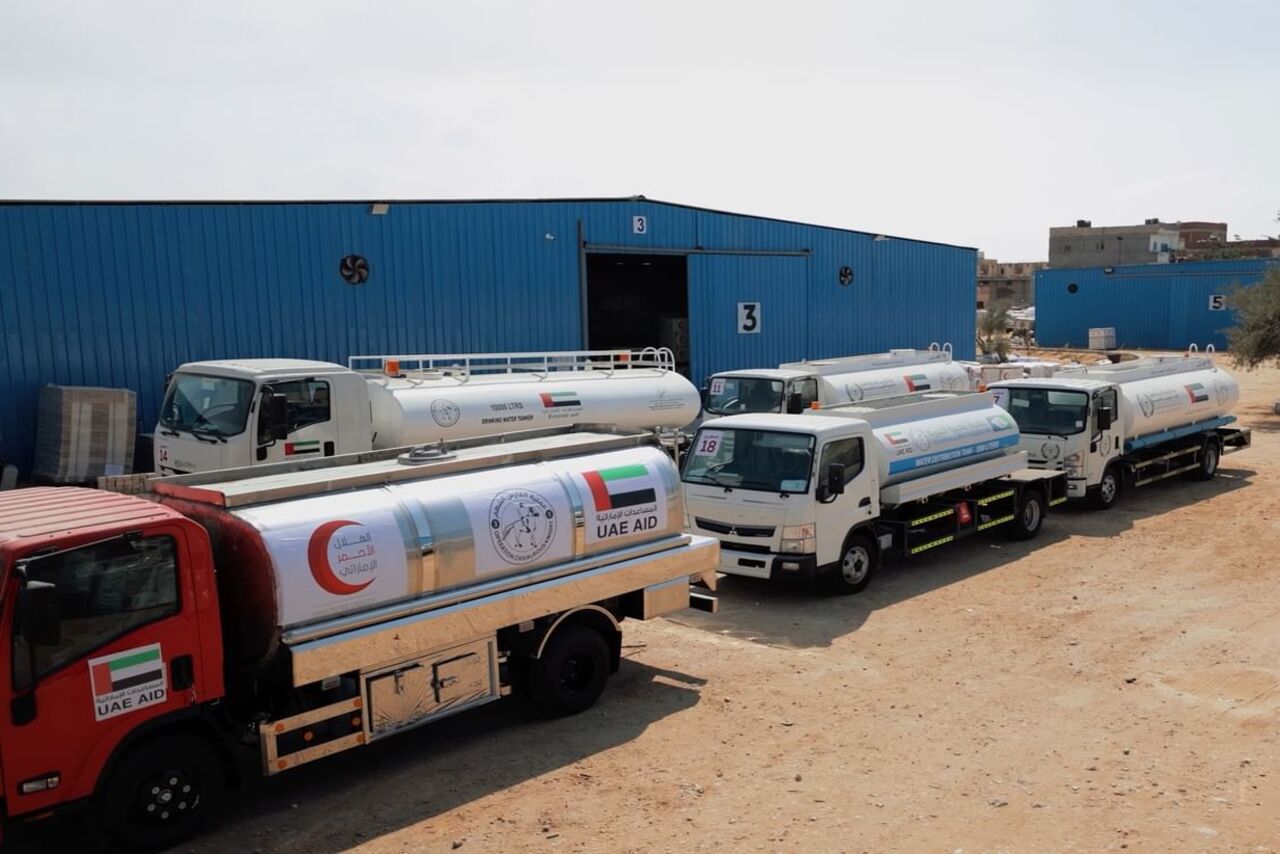
Water shortages hit hardest. Children lined up with bottles at broken pipes. Sanitation failed in whole districts. The UAE built a desalinated water pipeline from Rafah into Gaza, pumping nearly two million gallons daily to serve around a million residents. Crews worked under blazing sun, laying pipes across sand before night fell. Convoys of water tankers filled gaps, delivering to storage tanks when demand spiked.
Youth and Community Involvement
Operation Chivalrous Knight 3 pulled in young volunteers. The UAE’s Youth Social Mission turned warehouses into hubs of activity. In Sharjah, students taped boxes and stacked cartons until midnight.
In Abu Dhabi, groups sorted medicines and packed blankets. Many had never been part of a relief chain before, but their effort gave the mission its backbone at home.
Scale and Global Impact
The numbers alone are staggering. More than 90,000 tonnes of aid delivered. Over 3,000 trucks, 14 aid ships, nearly 600 airdrops. Financial costs crossing AED 4 billion. Operations continuing more than 500 straight days. Gulf Today called it one of the most sustained humanitarian commitments in the region. Each figure represents weeks of planning and long nights at border posts.
Challenges and Limitations
Relief faced obstacles at every turn. Borders opened and closed without warning. Convoys stalled for days. Distribution remained uneven, some areas reached later than others. Warehouses risked attack.
The financial strain stretched budgets. Organisers admitted sustainability was tough, but aid never fully stopped. The mission moved forward, sometimes slower, sometimes heavy with delays, but always moving.
Humanitarian Diplomacy and Global Solidarity
Operation Chivalrous Knight 3 grew into more than a relief chain. It positioned the UAE as a steady partner in humanitarian action.
Coordination with Egypt, work with medical teams, and mobilisation of youth gave it both reach and meaning. Gulf Today described it as both aid and message. For families in Gaza, it meant food, water, and medical care. For Arab countries, it stood as proof that leadership in relief is measured by what arrives on the ground.






 Top Stories2 weeks ago