Opinion
The Mecca Defence Pact Is Built on Convenience. Can It Last?

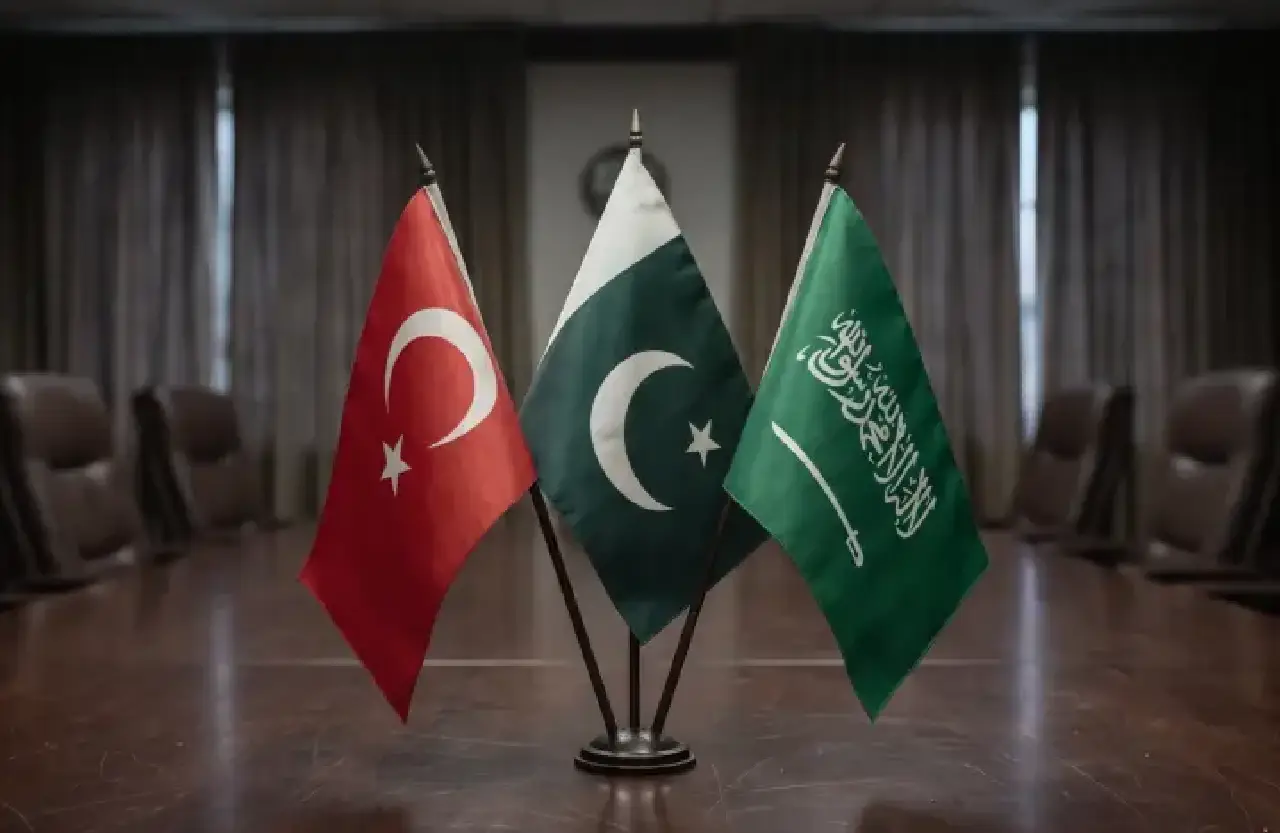
Saudi Arabia, Türkiye and Pakistan under the Mecca Joint Defence Agreement which was signed on August 7, 2026, is an ambitious step towards enhancing trilateral security cooperation. Unfortunately, its solemn promise of afflicted member states should be read as an attack on all, leaving it looking like a NATO-like collective defence pact.
Saudi Arabia provides finance and energy resources while the highly skilled defence technology and industrial infrastructure from Türkiye and military experience and conventional deterrence from Pakistan.
What Each Partner Wants?
The pact represents an additional safeguard for Riyadh’s strategy. Saudi Arabia should broaden its defense options and maintain its ongoing relationship with Washington. It also provides an opportunity to develop indigenous defense industry and reduce dependence on foreign suppliers.
The door going inward will give Türkiye access to central markets and developing partnerships with Gulf countries. Pakistan can gain economic and energy linkages, along with more footprints and military collaboration with two influential regional powers through deepening relations with Saudi Arabia.
Problem With Automatic Defence
The biggest problem with the pact is that there’s a disconnect between politics and war. Coordinate response to future war is difficult to ensure for two reasons, one of which is that strategic priorities for Türkiye, Saudi Arabia and Pakistan are very different.
The geopolitical equation basically demands that Turkey also think of its obligations and security needs for NATO in Syria, Iraq and in the Eastern Mediterranean. Saudi Arabia is worried about upholding the effectiveness of its economic shift, critical facilities and regional interests. Meanwhile Pakistan is very much preoccupied with its eastern neighbour India and its economic problems.
Nuclear Deterrence Is Not a Shortcut
Pakistan’s nuclear capability should not be seen as extending protection to its partners through a nuclear umbrella. The major objective of Pakistan’s nuclear arsenal is to establish national deterrence rather than collective defence of Saudi Arabia or Türkiye.
The difference is important because the strength of any pacts to secure peace rests on a foundation of clarity in military pledges, rather than just holding tremendous weapons in one country.
Can the Pact Become More Than Symbolic?
Lack of the structures of mature military alliances is the largest institutional problem. Political commitments to action on the battlefield would still be difficult if they were not tied to a joint operational headquarters, a chain of command, or well-established air-defence mechanisms.
In no way, though, does this suggest that the agreement is sure to fall apart. It might be best to look beyond a traditional military force partnership for its future potential. A true interdependence with practical implications such as joint weapons production or joint intelligence cooperation, military exercises, transfer of technology and professional training, may enhance relations gradually.
Real Test Lies Ahead
The Mecca Defence Pact doesn’t necessarily have to be an Islamic NATO to make strategic sense. Its durability could be just because of how flexible it is. With proper pruning of the areas of possible common interest the agreement can evolve into a permanent structure for defence cooperation between the three.
The great test will be when the nation’s state interests conflict. If a crisis with one member confronts the limitations of collective-defence pledges. For now, the agreement can best be viewed as a short-term alliance whose sustainability will rely more on the institutions and capacities established after the signing than on the sophisms presented at the moment by the parties.
FAQs
What is the Mecca Defence Pact?
The trilateral security agreement, the Mecca Joint Defence Agreement, has been signed between Saudi Arabia, Pakistan and Türkiye, and is composed of a collective defence component.
When was the pact signed?
The Saudi Türkiye and Pakistan sovereigns signed the agreement in Makkah on August 7, 2026.
What does the act’s ‘collective defence’ provision imply?
If a party to the agreement attacks any one party then the attack is against the three parties.
What is the Mecca Defence Pact?
The trilateral security agreement, the Mecca Joint Defence Agreement, has been signed between Saudi Arabia, Pakistan and Türkiye, and is composed of a collective defence component.
When was the pact signed?
The Saudi Türkiye and Pakistan sovereigns signed the agreement in Makkah on August 7, 2026.
What does the act’s ‘collective defence’ provision imply?
If a party to the agreement attacks any one party then the attack is against the three parties.


Dubai 7s 2026 Tickets Go on Sale: Dates, Prices and How to Book

Qatar Names 243-Athlete Team for Aichi-Nagoya 2026 Asian Games

The Mecca Defence Pact Is Built on Convenience. Can It Last?

H.H. Sheikh Mohammed Visits ADIHEX 2026, Celebrating UAE Heritage, Hunting and Equestrian Culture

Makkah Defense Pact: Strategic Committee to Hold First Meeting in Istanbul

UAE Expands Gaza Relief Efforts With New Aid Convoys Under Operation Chivalrous Knight 3
-

 News1 week ago
Global Humanitarian Leaders Gather in Dubai to Shape Future of Aid Ahead of DIHAD 2026
-
 News6 days ago
MBS and Macron Chair First Saudi-French Strategic Partnership Council Meeting in Paris
-
 Entertainment1 week ago
A Parent’s Guide to Visiting Panda House Park in Al Khor
-
 Reports7 days ago
UAE and Egypt Strengthen Energy Partnership With New Drilling Plans