News
UAE’s Humanitarian Model: Delivering Relief, Recovery and Resilience Worldwide

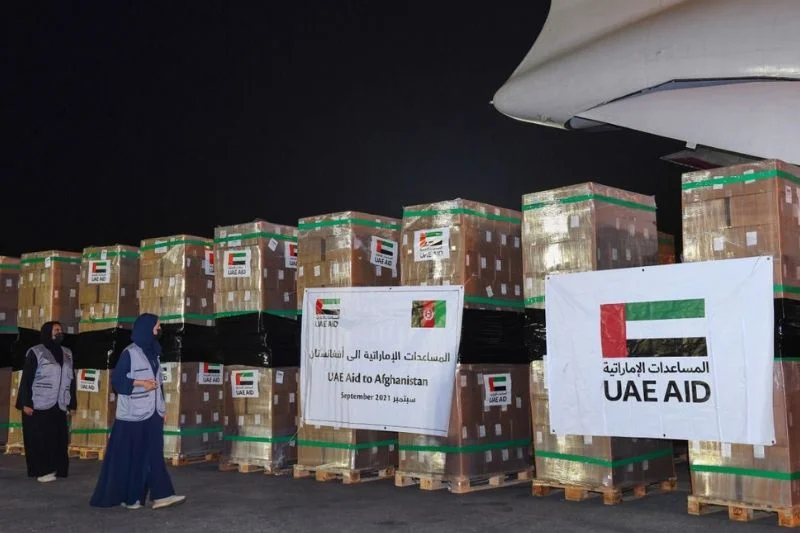
There is a growing requirement in humanitarian efforts to look beyond mere urgently delivered responses to whether or not communities can be helped after the world’s eyes have moved on. The countries impacted by crises such as war, natural hazards and public health crises around the world need ongoing collaboration that sees both short-term and long-term assistance.
In the last ten years, the UAE has gradually increased the size of its humanitarian endeavors, creating a framework aligned with expedient logistics and medical aid, food security and reconstruction assistance.
The country’s humanitarian efforts are now coordinated, responsive and dedicated to protecting lives and enhancing community resilience, ranging from the Middle East to South East Asia and Africa.
Rapid Response When Disaster Strikes
The critical period is often the first hours after a disaster. Communities of people affected will determine the speed of the onset of recovery from the ravages caused by the crisis situation through access to food, clean water, medical resources and temporary shelters.
The UAE has made substantial investment in humanitarian logistics, which allows for the quick mobilisation of humanitarian supplies via a dedicated air, land and sea network. This ability has enabled emergency support to be provided almost immediately to countries that have experienced earthquakes, floods, health crises and other crisis situations related to conflicts.
The UAE is gradually transitioning from humanitarian assistance towards continuity, stressing on offering support on top of recovery and rebuilding.The UAE has progressively shifted the focus from humanitarian assistance to continuity, placing emphasis on work that goes beyond immediate relief, towards recovery, and rebuild.
Educating Communities Across Regions
Today the UAE’s humanitarian engagement now reaches into multiple areas and various crises.
UAE aid efforts have focused on helping communities recovering from catastrophic earthquakes and typhoons in the Philippines with relief supplies, shelter support and rebuilding projects that help restore basic services.
The response to floods in Syria centered on food, medical supplies and temporary shelter to affected families that faced a variety of humanitarian needs due to extreme weather.
The UAE has also one of the region’s comprehensive humanitarian operations, including food convoys, medical evacuation, field hospitals, floating medical facilities and regular relief deliveries as part of long-term humanitarian activities in the Gaza Strip.
While each crisis has its own particular requirements, there is a common formula for response to get there fast, get to the population quickly and provide continued assistance.
Humanitarian Logistics as a strategic Capability
Logistics is an important factor that is central to the UAE’s humanitarian model. It is essential to have a highly efficient transport system, a warehouse system, coordination of customs and collaboration with international organizations to run modern relief operations.
The UAE’s investments in humanitarian infrastructure have boosted its capacity to swiftly transport critical aid across continents, and to reach the place most in need.
With this operational capability, governments, international organizations and humanitarian actors can respond more efficiently together, resulting in timely access to vital resources during emergencies.
From Relief to Recovery
It is important to note that there is a gradual increase in the range of support given to the beneficiaries as regards emergency allocation of food aid and medical support.
There is a need to rebuild healthcare systems, restore access to education, support livelihoods and build local resilience for future crises in order to make a recovery. The UAE’s response reflects this greater awareness, and consists of both relief and development activities to support families in regaining stability in the longer-term.
Such a recovery-oriented approach is especially valuable in areas that face recurrent disaster events or humanitarian crises that drag out over a longer period of time because it can help strengthen local institutions and increase the preparedness of communities to handle crises.
Global Humanitarian Partnership Model
The UAE’s humanitarian approach is one that is centered on cooperation with regional partners, charities, international organizations and the government. Partnerships enable relief operations to scale up rapidly, and ensure that humanitarian assistance responds through existing humanitarian channels.
The world is facing an increasing number of more complex and more interconnected crises. Coordinated humanitarian assistance has a growing impact on the ability to act in an effective manner. Logistics investments, medical response funds and development assistance are key UAE efforts that highlight the importance of resilience.
The country’s humanitarian efforts showcase a new approach to the work which will help pave the way for the UAE to become more than just a donor country, but a global humanitarian partner that can assist communities in their recovery and reconstruction efforts, and that can help them brace for future challenges.
Explore More Must-Reads
What Drives Vision 2030 EV Growth?
Explore how electric vehicles are shaping a greener GCC future under Saudi Arabia’s Vision 2030 initiatives.
Which Mega Projects Lead Vision 2030?
Discover the most ambitious mega projects transforming Saudi Arabia’s landscape and economy.
How Budget 2026 Supports Vision 2030?
Check how Saudi Arabia’s 2026 budget fuels growth and revenue under Vision 2030 plans.
How Vision 2030 Changes Gulf Jobs?
Explore how Vision 2030 is reshaping job markets and career opportunities across the Gulf region.
What Defines Riyadh’s Vision 2030 Lifestyle?
Discover how urban development is transforming lifestyle and living standards in Riyadh.


Nobel Prize 2026 Winners Full List Categories and Achievements

From Abu Dhabi to Brussels: Europe’s Growing Focus on the Muslim Brotherhood and Cross-Border Security

Top 10 Staycations and Overseas Trip Options for UAE Families During Nine Day Half Term School Break

UFC Fight Night Doha Tickets Go on Sale: Guide on Ticket Price, How to Buy Tickets and Attend the Event

Saudi Aviation Authority Confirms 1 Dead, 11 Injured on Sunday Riyadh Airport Attack

UAE Flight Suspensions Extend Across Saudi Arabia
-

 Reports3 days ago
UAE and Saudi Arabia Seek to Strengthen Rail and Infrastructure Integration
-
 Entertainment3 days ago
Lusail Circuit Opens Volunteer Applications for 2026 MotoGP and Formula 1
-
 Reports3 days ago
Kuwait Urges Unified Global Response to Terrorism and Financing
-
 News3 days ago
Trade Deal Talks Concluded Between UAE and Thailand