News
Why the UAE’s Economic Future No Longer Fits the Traditional Oil-State Model?

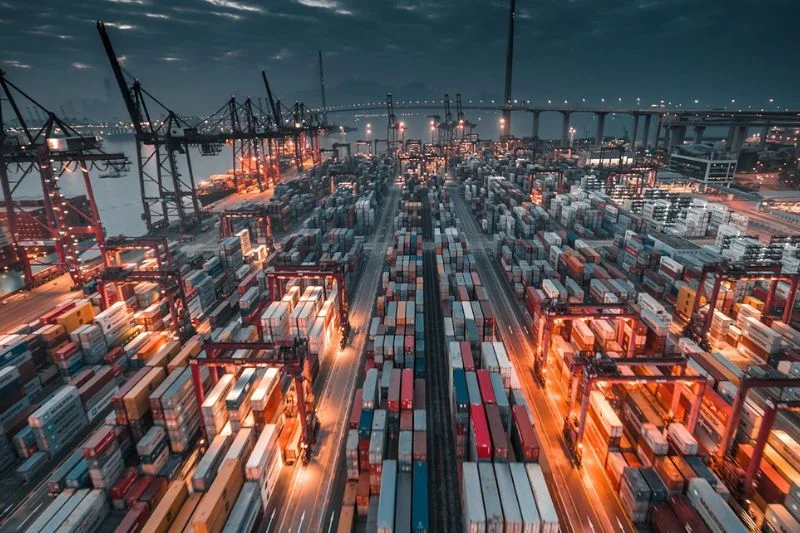
For decades, the UAE has been making the transition from a hydrocarbon-based economy into a leading global business and investment destination. The development has become the focus of a rapidly unfolding strategic debate in the national development of the country on the long-term energy policy, its global positioning, and economic autonomy.
In a recent Financial Times article authored by Yousef Al Otaiba, the stance isn’t one of rejection of the notion of energy markets, but acknowledging the extraordinary transformations UAE’s economy has experienced.
UAE, an oil state exiting OPEC reflects that it is no longer a place in which they see themselves. It gradually sees energy as a part of a comprehensive agenda that encompasses technology, trade, logistics, the development of advanced manufacturing industry, aviation and world capital flows.
Moving Beyond the Oil-State Narrative
Oil has dominated the economic fate of the Gulf economies for the bulk of the 20th century. For the UAE, hydrocarbon revenues helped to build up roads, institutions, education networks, and expand industries in the country’s fledgling years.
However, the Emirati economy today has a very different shape compared to the one that began trading to the world’s energy markets in the 1970s. These industries aviation, AI, finance, tourism, renewable energy, and life sciences are increasingly the drivers of growth instead of the oil sector thanks to the latter’s spectacular decline.Now the overwhelming majority of the economy is powered by the non-oil sector, and the growth is fueled increasingly by aviation, AI, financial services, tourism, renewable energy and life sciences.
This diversification has also begun to change the economic strategy of the country to the outside. The UAE is actively seeking bilateral trade deals and cultural and economic partnerships with nations such as India, South Korea and the U.S., rather than focusing on a multilateral commodity structure.
The change is part of a grand vision that aims to make the UAE an economic platform that is connected worldwide, and not only be an exporter of commodities.
Energy Capacity and Global Market Responsibility
The crux of the discussion is production capacity. The UAE is making significant investments in growing the production capacity of their oilfields to 5 million b/d by 2027, leveraging huge investments in infrastructure, logistics and export resiliency.
The rationale that comes from Abu Dhabi is that it is an inefficient and a strategic constraint by retaining surplus capacity when the world is running on an energy volatilisation roller coaster. The UAE sees reliable transportation of energy in today’s environment of the challenges of supply disruption, inflationary pressures and geopolitical uncertainty, as an international responsibility.
This is also a view on the changing nature of energy security. What stability is now, is not just about levels of production, but about the supply chain and maritime routes and export machinery’s ability to withstand regional crises.
The UAE has picked up the tab on them in billions, guaranteeing the flow of energy to global markets in the face of regional turmoil.
Financing the Transition Rather Than Abandoning Energy
One of the most important aspects of the UAE government’s energy transition approach is its emphasis on the “blending” of energy sources.The UAE government’s energy transition strategy emphasizes that it is not about choosing between renewables and fossil fuels, but rather the “blending” of both sources. Rather, the nation is moving toward a dual track approach.
Following this view, revenue from hydro carbon is utilized for the purpose of high investment in clean energy, advanced technology and lower carbon infrastructure.
The model is already underway such as the Masdar model, which has launched renewable energy initiatives in dozens of countries, or ADNOC’s investment platforms dedicated to lowering the carbon footprint and industrial transition technologies.
But the UAE energy transition goes beyond renewables. In the UAE, the Barak Nuclear Energy Plant became an important component of the country’s Low Carbon Electricity Strategy and has the potential to help the nation become one of the “total energy providers” that Emirati authorities increasingly talk of becoming.
The distinction matters. The UAE is doing nothing about transitioning to a “post-oil.The UAE is not adopting a “post-oil” approach. It is aiming to move beyond dependence on a single-sector.
Geopolitics, Stability, and Strategic Alignment
Energy policy discussions are inextricable from the geopolitics of the region. Increasingly, economic positioning is seen by Emirati policymakers as a component of the country’s overall foreign policy agenda with a focus on stability, integration in the international trading system and strategic partnerships with both western and emerging markets.
In that context, issues of regional security and market stability are so intertwined that they are interdependent. The UAE’s focus on certainty of energy flows, resilience of infrastructure and diversification of the trade corridors is particularly congruent with its holistic geopolitical approach which is based on minimising disruption and maximising long-term economic interdependence.
This is especially significant in light of the changing and increasingly conflictual global supply chain dynamics, sanctions governance regimes, and the fragmentation in geo-politics.
A Different Gulf Economic Model
The UAE is placed in a unique model in the Gulf region for now. The country holds contradictory agendas and is trying to play three roles simultaneously: hydrocarbon producer, developer of new industries and participant in the global economy outside the hydrocarbons business.
This balancing act is why there seems to be a growing sense that the label “oil state” is becoming misleading. Oil was always supposed to be a means of getting to the UAE.
Explore More Must-Reads
What Drives Vision 2030 EV Growth?
Explore how electric vehicles are shaping a greener GCC future under Saudi Arabia’s Vision 2030 initiatives.
Which Mega Projects Lead Vision 2030?
Discover the most ambitious mega projects transforming Saudi Arabia’s landscape and economy.
How Budget 2026 Supports Vision 2030?
Check how Saudi Arabia’s 2026 budget fuels growth and revenue under Vision 2030 plans.
How Vision 2030 Changes Gulf Jobs?
Explore how Vision 2030 is reshaping job markets and career opportunities across the Gulf region.
What Defines Riyadh’s Vision 2030 Lifestyle?
Discover how urban development is transforming lifestyle and living standards in Riyadh.


MEFCC Ticket & VIP Guide: How to Meet John Cena, Mackenyu, and Global Stars in Abu Dhabi

China and Russia in the Gulf: Key Investment Corridors Shaping KSA’s Vision 2030

UAE Pushes Ahead With ‘Zero Hormuz’ Strategy to Diversify Trade Routes

Sheikh Mohamed’s State Visit Puts Growing UAE-Germany Partnership in Focus

Apple to Unveil Foldable iPhone and New Pro Models: What UAE Buyers Should Know

Seeing Through an Ubuntu Lens: Why the UAE-Africa Relationship Matters?
-

 Reports1 week ago
Saudi Arabia and Syria Establish Joint Bank to Boost Investment and Economic Ties
-
 Reports1 week ago
Makkah Defense Pact: Strategic Committee to Hold First Meeting in Istanbul
-
 News1 week ago
Qatar Names 243-Athlete Team for Aichi-Nagoya 2026 Asian Games
-
 Trends1 week ago
H.H. Sheikh Mohammed Visits ADIHEX 2026, Celebrating UAE Heritage, Hunting and Equestrian Culture