
Opinion
Trump’s AI Dilemma: Protect Innovation or Tighten the Rules?

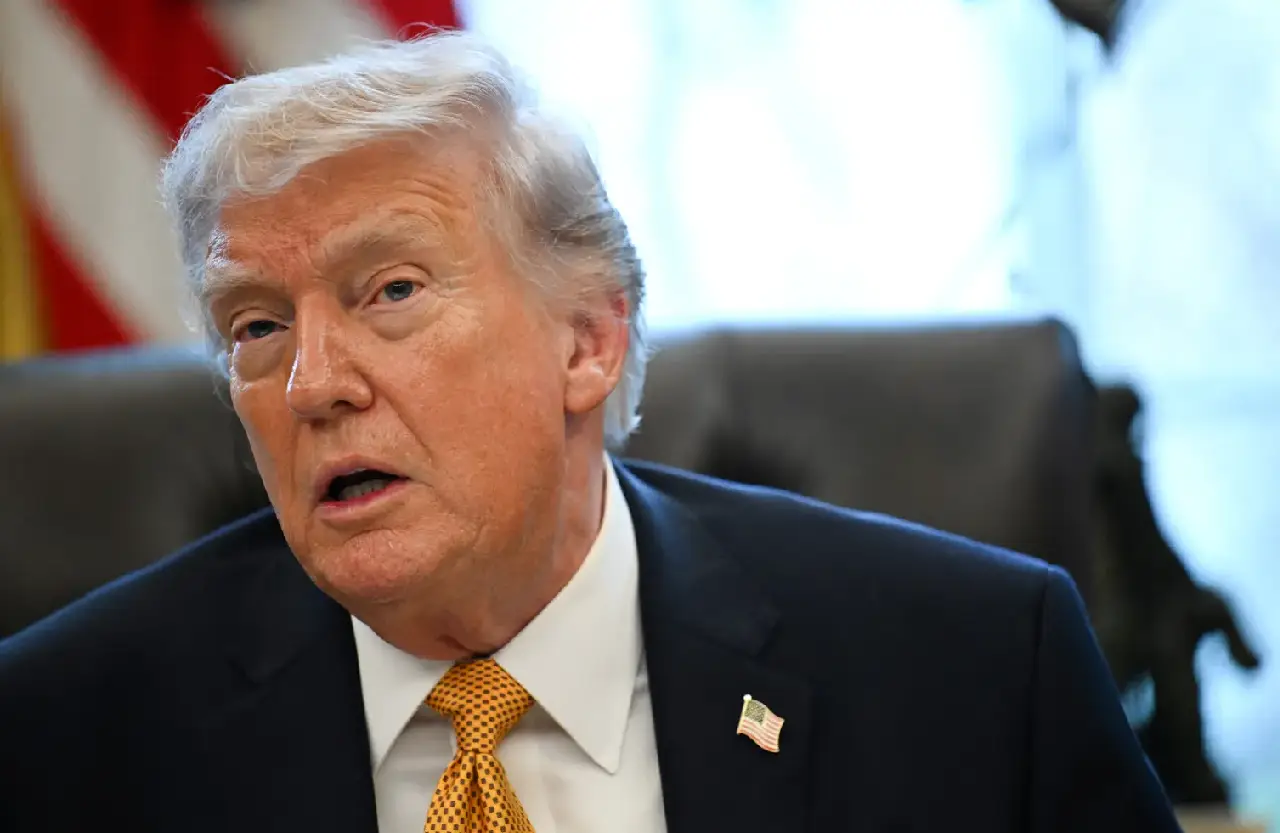
The competition between the U.S. and other countries for dominance in AI applications has become more complex. This is what you need to do, so speed doesn’t leave you an “opening” later that Washington will come to regret.
The administration has adopted a fairly liberal stance towards AI, favouring deregulation, accelerated growth of data-centres and less restrictions on commercial roll-out. This, however, is becoming an on-camera AI cyber security, infrastructure protection and national security dilemma, as more and more sophisticated frontier models emerge.
Case for Protecting Innovation
Artificial intelligence has been making rapid progress, and US businesses are facing tough competition from more sophisticated competitors, particularly China.
On the other hand the heavy regulations imposed by the federal government could raise costs for compliance, add delays in the product launch and render the United States less appealing to investors and entrepreneurs. In a world increasingly shaped by AI, Washington’s newly restated goal of keeping technological leadership is no trivial virtue, holding national security implications.
Given the administration’s opposition to a piecemeal approach to a state-by-state patchwork of laws on AI, it makes sense to have a rational reason. A broken regulatory regime could send firms to meet with dozens of standards to deploy the same technology across the country.
Frontier AI Changes the Equation
The trouble is, frontier AI is no longer just as much a business about chatbots or productivity software. Agentic systems have the potential to be able to do sequences of actions, interact with networks and operate increasingly autonomously.
This forms another type or class of risk. One application flaw in a single model may lead to broader effects on food, energy, or other essential services or networks of critical importance to the economy.
The need for greater federal regulation becomes more plausible. But there could be core common specifications and rules forcing companies to undertake their own security examinations as well as reporting to the authorities and implementing suitably developed emergency security protections without having to secure every single model.
The “Kill Switch” Debate
Washington’s growing nervousness is reflected in proposals for automatic emergency shut off for artificial intelligence. Advocates say that when models act erratically or in an unsafe manner, developers of very capable systems should be able to stop their deployment.
The real question for critics, however, is who would have the power to control such a mechanism, when such control would be necessary and what precautions would be needed. Such an ineffectively designed federal “kill switch,” if it was created, may end up slowing innovation in U.S. AI, new research and potential security risks demonstrate, and could be a bureaucratic hindrance.
Hence, rather than mass intervention, targeted intervention might be a better way to go. The focus for regulation should be on risks that are demonstrated, and less on a blanket prohibition on every AI use case considering it to be a threat to the nation’s security.
America Needs One Federal Standard
There needs to be something more substantive offered in exchange by federal policymakers if Washington is to be savvy enough to dissuade states from developing competing regimes for artificial intelligence. There is a risk that, without a worthwhile arrangement on the national level, blanket preemption can leave behind a void.
A national standard for frontier-model testing, cyber security, and reporting and protecting critical infrastructure. Meanwhile, less risky applications may continue to be subject to less stringent requirements.
This would bring something akin to predictability to the regulatory system, and provide national-security agencies with a tool to act when AI technology crosses specific lines.
The GCC Opportunity
The international investment framework of AI will also be affected by America’s regulatory debate. Both Abu Dhabi and Riyadh have sovereign AI initiatives based on massive computing power, energy facilities and state-funded investments.
The United States might start to look like an increasingly appealing place for AI infrastructure and testing if its regulations become too heavy-handed. If, however, Washington sets clear safeguards in place, but doesn’t impact commercial freedom, American firms have a strong ability to remain a formidable force to attract global investment and business partners.
Finding the Middle Ground
At the heart of Trump’s AI conundrum is not simply a balance between innovation and safety. The United States needs both.
The policy that would win would enable businesses to move ahead on innovations a lot quicker, and would set in place greater accountability when the AI might pose a threat of a material national-security or critical-infrastructure risk. Freedom to innovate, responsibility at scale are the objectives.
Caterpillars no longer need to be regulated in America. However, it can’t be imperiled on a frontier scenario and find that AI governance falls short of a suitable solution after it has done some harm.
FAQs
How will Trump overcome his biggest obstacle in launching an AI policy?
The administration must strike a balance between the need for quick technological advancements and measures taken to prevent cybersecurity national-security and critical-infrastructure risks.
What are the reasons that the White House is a bit against the idea of fragmented state AI regulation?
The proliferation of such requirements could create an added cost and complexity burden for compliance, and impede companies’ ability to roll out AI products uniformly throughout the United States.
What are the implications for the GCC of the US policy on AI?
This regulatory rigor may spur more investments and exploration of AI in markets like Abu Dhabi and Riyadh in the UAE, and more predictable US regulation could keep America a leading global AI hub.
You May Also Like
What’s Driving UAE Economic Growth?
Explore how IMF projections highlight the UAE’s strong expansion and regional leadership in the coming year.
Why Is UAE Leading MENA Growth Rankings?
Discover the key factors behind the UAE’s top GDP growth position across the Middle East and North Africa.
How Is Oman Showing Economic Resilience?
Check how Oman’s economy continues to stay stable and resilient despite global financial uncertainties.
Will UAE Banks See Lending Boom?
Explore why UAE banks are expected to witness significant lending growth and financial sector strength.
How Can Expats Manage Money in Dubai?
Discover smart personal finance strategies that help expats save, invest, and thrive in Dubai.


Mohammed bin Salman Arrives in Cairo as Saudi-Egypt Talks Begin

Etihad Airways and Etihad Rail Sign Deal to Link Air and Rail Travel

Bab al-Mandab Crisis: What the Houthi Expansion Means for Ships and Trade?

Mohammed bin Rashid, Syrian President Discuss Bilateral Ties During Arab Media Summit 2026

Houthi Drone Downed Near Makkah: Saudi Arabia Issues ‘Red Line’ Warning

UAE Allocates $8 Million to Chad to Fight Hunger and Malnutrition Amid El Niño Food Crisis
-

 Trends1 week ago
UAE Schools to Get 9-Day October Break as Dubai Schools Revise Half-Term Dates
-
 Trends7 days ago
iOS 27 Release Date Confirmed: Apple’s New iPhone Update Arrives September 14
-
 Reports1 week ago
Saudi Arabia Opens Security and History Dialogue 2026 in Riyadh
-
 News7 days ago
Bahrain International Airshow Postponed to 2028 Amid Regional Conflict