News
World Space Week: UAE Achieves Major Milestones in Global Space Exploration

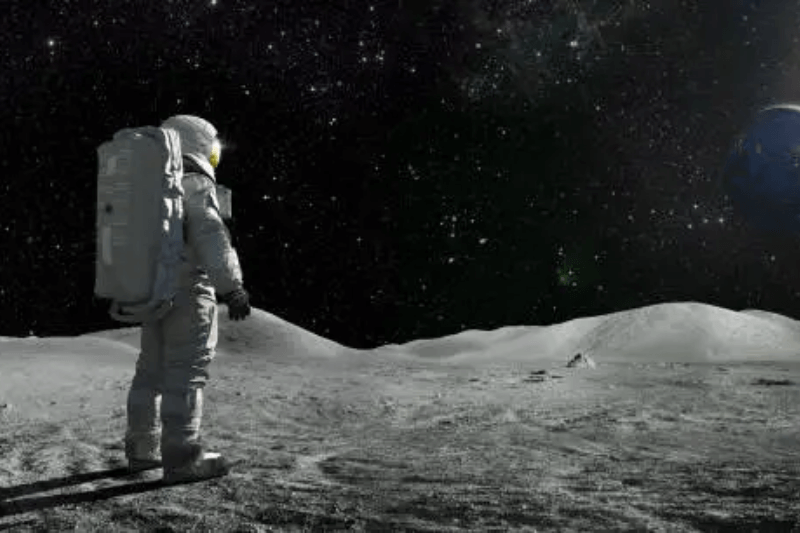
The United Nations declares that World Space Week is celebrated every year between 4 and 10 October and focuses attention on the success and hopes that nations commit to space science and technology. Specifically, the UAE has become a leader in the space race all over the world. It has invested heavily in creating new technological solutions, engaging in collaborative efforts with other nations, and extending missions to space, making it critical to establish new centres of high-quality research in space in the country. Mars to the moon, and even more so the asteroids, the UAE is presenting tremendous ideas not only as evidence of its science and technological greatness, but also in future generations of scientists, engineers, and space voyagers.
UAE Missions to Space: Pioneering the Future
The space adventure of the UAE has gained momentum over the last decade, with historic missions, which have made it build a robust reputation globally.
1. Emirates Martin Mars Mission (Hope Probe).
The Hope Probe, the first probe of its kind in the Arab world, was launched on July 19, 2020, and inserted into Mars orbit on February 9, 2021, becoming the first probe to fly to the Red Planet. The main objective of the mission involves the examination of the atmosphere of Mars with three scientific tools that would enable a thorough examination of the daytime to night cycle of weather across Mars. The Mohammed bin Rashid Space Centre (MBRSC) is the leader of this mission, in cooperation with NASA, EIAST and the best universities in the US, UK and UAE. This was not only a step in the process of planetary science, but also placed the UAE on a list of countries venturing into Mars.
2. Lunar Procession (Emirates Lunar Mission, Rashid Rover).
In 2020, it was announced together with the Rashid Rover that launched inside the space vessel HAKUTO-R Mission 1 on December 11, 2022. The mission was initially an accomplishment to the UAE as it was the first lunar exploration exercise though its anticipated landing on April 25, 2023 was unsuccessful. Constructed absolutely by MBRSC and in partnership with other firms all over the world, Rashid 1 was the first step in creating Rashid 2, which enhanced the expertise of the country with respect to rover technology.
3. Emirates Space Mission to the Asteroid Belt.
The UAE announced plans to visit the asteroid belt in May of 2023. The mission will do flyby missions of six asteroids in 2028, before landing on 269 Justitia in 2034. Such innovative project will make contributions to the study of the origins of asteroids, deep space mining possibilities and defense against the planets. The mission is an ambitious endeavor into space exploration, and will be headed by the UAE Space Agency with the University of Colorado at Laboratory for Atmospheric and Space Physics (LASP).
4. Space Club Emirates Airlock (Lunar Gateway Partnership)
In January 2025, the UAE became signatory to an agreement to build the Emirates Airlock to NASA on its Lunar Gateway station, which is part of the Artemis program. The module will advance the lunar missions, radiation studies and long-term missions to Mars. It is also a joint project with NASA, ESA, JAXA, and CSA where the UAE will launch its first astronaut into a lunar orbit. The project solidifies the UAE as an important global partner in the development of the future of human spaceflight.
Global Partnerships: UAE Expands Its Space Network
The advancements of the UAE when it comes to space exploration are not restricted to missions alone. The country has also established a close relationship with the major countries and space agencies, and it has focused on collaboration as the key to its development.
- USA (Firefly Aerospace): Firefly Aerospace will tear a lunar, in which the US company will deliver the Rashid 2 rover on the dark side of the Moon.
- France (CNES): France CNES is providing cameras and image-processing support to Rashid 2, with further cooperation ongoing on the basis of existing MoUs.
- China (CNSA): The UAE convinced CNSA to sign an MoU with them regarding the Chang-e 7 mission that is scheduled to place Rashid 2 on the Moon.
- Egypt: New MoU between UAE and Egypt is dedicated to the Earth observations, satellite technology, and peaceful space research.
- South Africa: UAE signed an MoU with SANSA to cooperate with the exchange of data, regulation, and talents development.
- South Korea: Development of cooperation in the space field, satellite navigation, and communication implementation.
- Japan (ispace): ispace worked with MBRSC on delivery of the lunar payloads during the Emirates Lunar Mission.
Conclusion
The history of space exploration in the UAE serves as evidence of the progressive outlook and the ambition to become one of the major powers in the future of humanity among stars. The UAE has also redefined itself into an east-west corridor of space through high-profile missions, technological development and also through global partnerships. With the United Arab Emirates marking the World Space Week, the country is proving not only as a force of its own rising amongst the Arabs but also as a reliable international player in creating a new phase of space exploration.


Nobel Prize 2026 Winners Full List Categories and Achievements

From Abu Dhabi to Brussels: Europe’s Growing Focus on the Muslim Brotherhood and Cross-Border Security

Top 10 Staycations and Overseas Trip Options for UAE Families During Nine Day Half Term School Break

UFC Fight Night Doha Tickets Go on Sale: Guide on Ticket Price, How to Buy Tickets and Attend the Event

Saudi Aviation Authority Confirms 1 Dead, 11 Injured on Sunday Riyadh Airport Attack

UAE Flight Suspensions Extend Across Saudi Arabia
-

 Reports3 days ago
UAE and Saudi Arabia Seek to Strengthen Rail and Infrastructure Integration
-
 Entertainment3 days ago
Lusail Circuit Opens Volunteer Applications for 2026 MotoGP and Formula 1
-
 Reports3 days ago
Kuwait Urges Unified Global Response to Terrorism and Financing
-
 News3 days ago
Trade Deal Talks Concluded Between UAE and Thailand